 Pin it
 Last winter, a friend handed me a package of shirataki noodles with a skeptical smile, insisting they'd changed her entire approach to comfort food. I was doubtful—noodles with basically zero carbs sounded like a compromise I didn't want to make. But that first bowl, steaming with bone broth infused with ginger and garlic, was nothing like the sad diet meal I'd imagined. It was genuinely warming, deeply savory, and left me satisfied without that heavy feeling. Now it's become my go-to when I want something that tastes indulgent but doesn't leave me sluggish.
I made this for my mom on a gray afternoon when she mentioned feeling depleted, and watching her wrap those noodles around her spoon with real enthusiasm reminded me how food does more than fill us. She asked for the recipe that same evening, which meant everything coming from someone who usually sticks to her old habits.
Ingredients
- High-quality bone broth (beef or chicken), 4 cups: This is your foundation—use the best you can find or make your own if you have time, because every other flavor hangs on it.
- Fresh ginger, thumb-sized piece, sliced: Slicing rather than mincing gives you control over intensity and lets you fish it out easily; the warmth it brings is non-negotiable.
- Garlic cloves, 2, smashed: Smashing them exposes more surface area and releases their oils into the broth more effectively than chopping.
- Soy sauce or tamari, 2 tablespoons: Tamari is your safest bet if you're cooking for anyone gluten-sensitive, and honestly the flavor is just as deep.
- Rice vinegar, 1 tablespoon: This brightens everything and prevents the broth from tasting flat—don't skip it even though it seems minor.
- Sesame oil, 1 teaspoon: A small amount goes far; it adds that distinctive nutty finish that makes people ask what makes it taste so good.
- Shirataki noodles, 400 g drained and rinsed: Rinsing thoroughly matters more than you'd think—it removes the fishy smell that can catch you off guard otherwise.
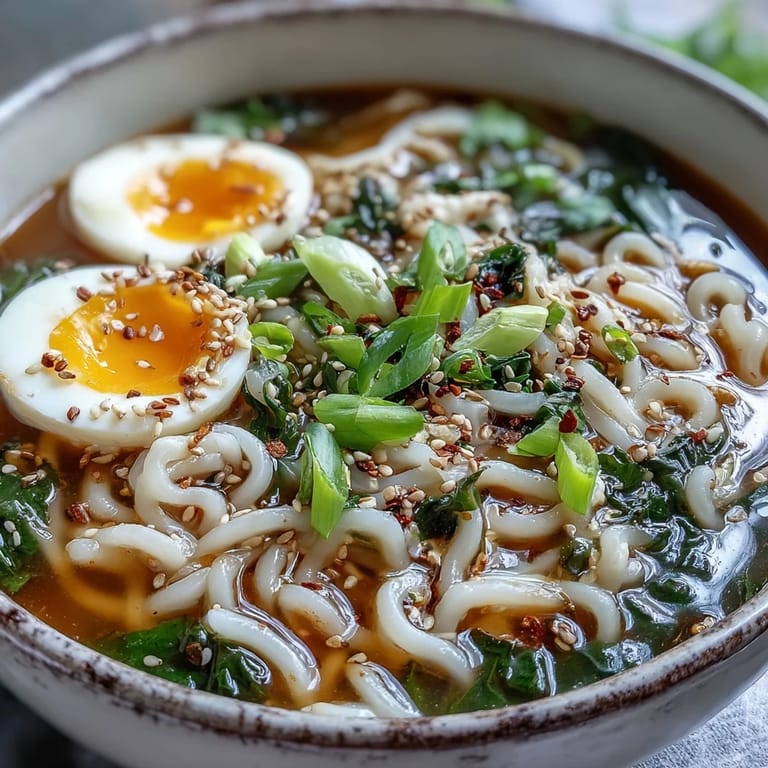
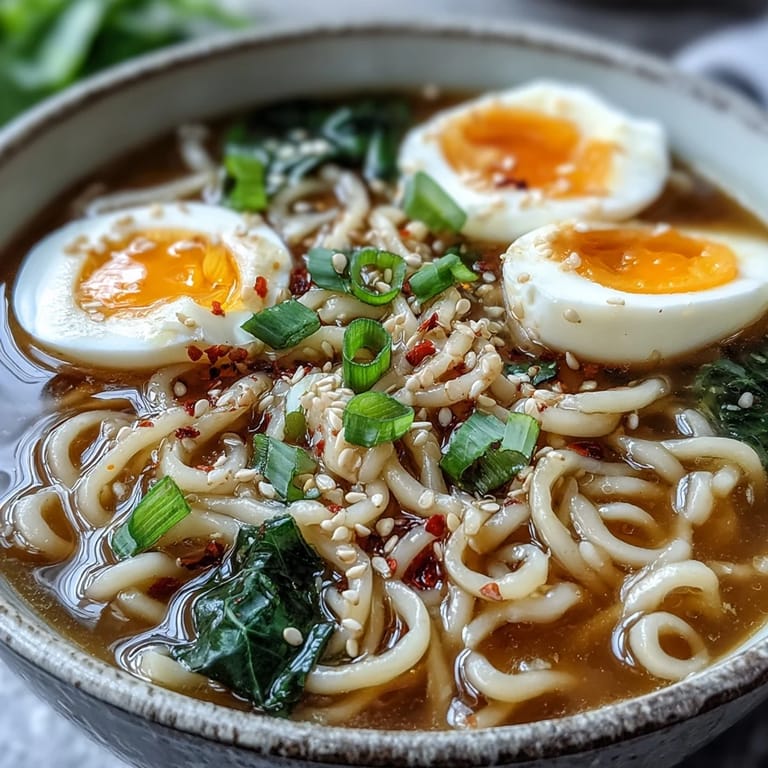
- Soft-boiled eggs, 2, halved (optional): The runny yolk mixing into the warm broth is what transforms this from light to genuinely satisfying.
- Spring onion, 1 small, thinly sliced: Keeps things fresh and cuts through the richness with a subtle bite.
- Red chili, 1 small, thinly sliced: Heat is optional but it brings out flavors you didn't know were hiding in the broth.
- Fresh coriander or parsley, chopped: Either works; coriander feels more authentic to the flavor profile but parsley is lighter if that suits you better.
- Toasted sesame seeds: Toast them yourself if you can—the smell alone is worth the extra minute it takes.
Tired of Takeout? 🥡
Get 10 meals you can make faster than delivery arrives. Seriously.
One email. No spam. Unsubscribe anytime.
Instructions
- Build your broth foundation:
- Pour your bone broth into a medium pot and add the sliced ginger, smashed garlic, soy sauce, rice vinegar, and sesame oil. Bring it to a gentle boil over medium heat, watching for the first signs of steam and movement.
- Let flavors marry:
- Reduce the heat and let it simmer for 10 minutes—this is when the ginger perfumes everything and all those elements start speaking to each other instead of shouting over one another.
- Rescue your noodles:
- While that's happening, drain your shirataki noodles and give them a thorough rinse under cold water. Place them in a sieve and pour boiling water over them to knock out any lingering odor that can surprise you if you skip this step.
- Introduce the noodles:
- Slide your rinsed noodles into the simmering broth and let them heat through for 2 to 3 minutes—they won't soften like regular noodles because they're already cooked, but they need time to absorb that warmth and flavor.
- Finish and serve:
- Fish out the ginger slices and garlic pieces, then divide everything evenly between two bowls. The broth should smell aromatic and look inviting, ready for whatever toppings you're adding.
- Crown your bowl:
- Top each serving with a soft-boiled egg if you're using them, then scatter on spring onion, chili, fresh herbs, and a small handful of toasted sesame seeds. The contrast of warm and cold, creamy and crispy, is where the magic lives.
 Pin it
 There's something about bringing a steaming bowl of this to someone and watching them pause mid-conversation, leaning over to catch the steam rising up. It becomes more than dinner at that moment—it's an offering that says I made this with you in mind.
Why Shirataki Noodles Are Quietly Brilliant
The first time I bought shirataki noodles, I treated them like a compromise—something to eat when I wanted noodles but couldn't justify the carbs. That thinking flipped when I actually tasted them in the right context, which is here, swimming in an aromatic broth where their neutral texture becomes an asset instead of a limitation. They're essentially edible vessels for whatever liquid you submerge them in, and in bone broth specifically, they disappear into the background and let the star of the show shine. Once you stop expecting them to taste like wheat noodles, they become genuinely useful.
The Broth Matters More Than You Think
I learned this the hard way by once trying to make this with store-bought broth I didn't taste first, and the result was something that technically worked but felt hollow. Good bone broth has body, richness, and a subtle sweetness from the collagen breaking down—those qualities are what make this dish sing. If you're serious about this becoming a regular meal, consider making a batch of broth on a lazy Sunday or sourcing the highest-quality store-bought version you can find. It's the one place where cutting corners shows immediately in the final bowl.
Timing and Temperature Secrets
This dish lives in the space between speed and care—it's genuinely quick, but it rewards those moments where you slow down. Let the broth simmer for its full 10 minutes rather than rushing it, because that's when the ginger and garlic stop being separate flavors and become integrated. The broth should be hot enough to make you happy when you eat it, but not so aggressively boiling that it's chaotic to serve. Once the noodles go in, they only need a few minutes—overcooking them won't hurt them the way it would wheat noodles, but you're aiming for that moment where everything is warm and unified.
- If your broth cools before serving, a quick 30-second reheat on medium-high brings it right back without changing anything.
- Have all your toppings prepped before the noodles go in so you can move from pot to bowl in one smooth motion.
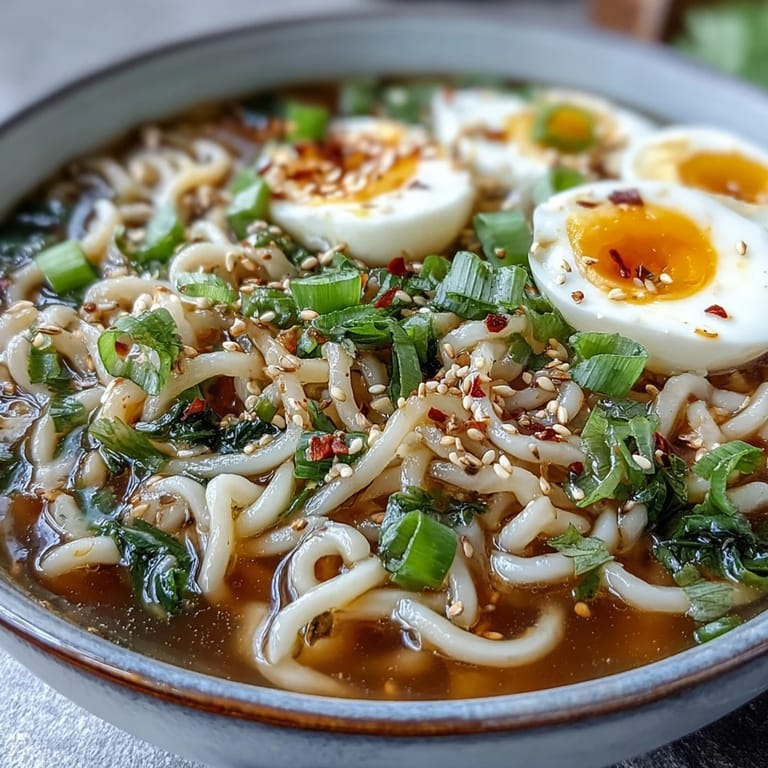
- The soft-boiled egg should be still slightly warm when you slice it so the yolk runs freely into the hot broth.
 Pin it
 This has become the meal I turn to when I want to feel taken care of without spending an hour cooking, which is maybe the highest compliment a recipe can get. It's genuinely satisfying, surprisingly comforting, and never once leaves you questioning whether it was worth the effort.
Recipe FAQs
- → How do I prepare shirataki noodles?
Drain and rinse thoroughly under cold water, then pour boiling water over them in a sieve to remove any natural odor before adding to your broth.
- → Can I make this vegetarian?
Yes, simply swap the bone broth for a rich vegetable broth and use tofu or skip the egg topping for a complete plant-based version.
- → What makes shirataki noodles special?
These Japanese noodles are made from konjac yam, making them virtually zero-carb and calorie-free while still providing a satisfying noodle texture.
- → How long will the broth keep?
The broth base can be made ahead and stored in the refrigerator for up to 4 days, though it's best enjoyed fresh when the noodles retain their texture.
- → Can I add more protein?
Absolutely—shredded cooked chicken, pork, or extra tofu work beautifully. Simply add them during the last few minutes of simmering to heat through.