 Pin it
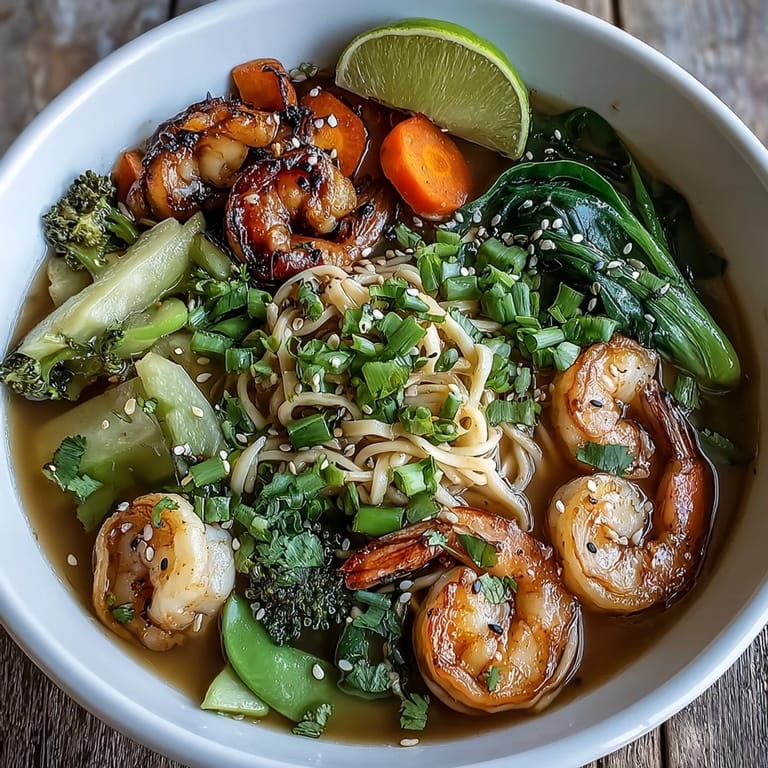
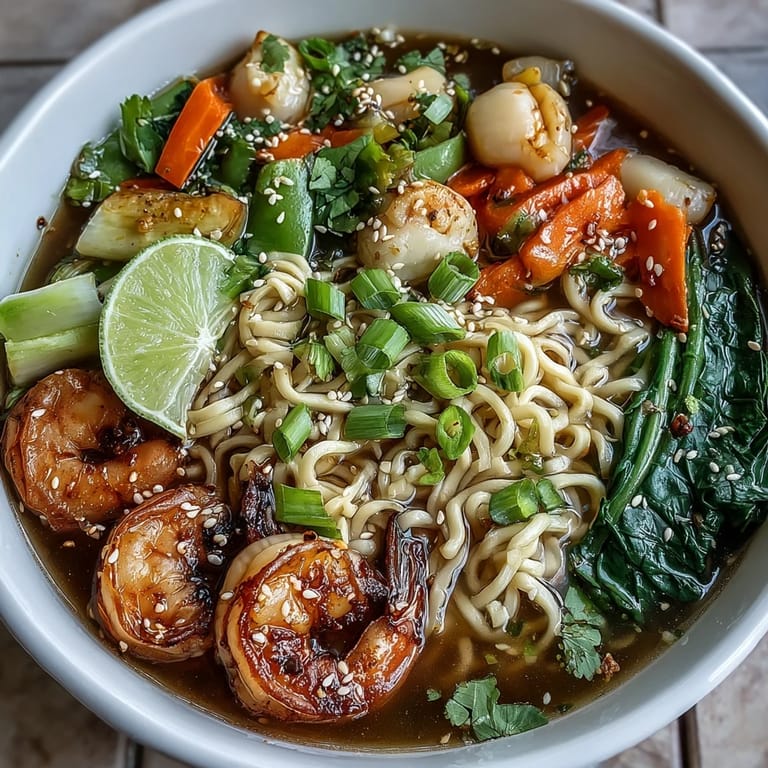
 There's a particular magic that happens when you're standing in front of a steaming pot on a quiet weeknight, watching shrimp and scallops turn from translucent to opaque in what feels like seconds. I discovered this bowl on an impulse, really—I'd picked up some beautiful scallops at the market and suddenly wanted to do something more interesting than pan-searing them alone. What started as a simple question of what to do with those scallops became this vibrant, aromatic noodle situation that's now become my go-to when I want something that tastes like I spent hours in the kitchen but genuinely doesn't.
I made this for my friend Sarah on a cold evening last March, and I remember her leaning over the bowl, steam hitting her face, and just pausing for a moment before tasting it. She said something like, "I didn't know I needed this right now," which is exactly what this bowl does—it shows up at just the right time, warming you from the inside out with something that feels both comforting and a little bit exciting.
Ingredients
- Large shrimp (200 g / 7 oz), peeled and deveined: The shrimp is your protein anchor here, so don't skip the deveining—it takes two minutes and changes the eating experience completely.
- Sea scallops (200 g / 7 oz), cleaned and patted dry: Pat them dry before cooking, seriously; this small step is what gets you that beautiful sear and keeps them from steaming.
- Rice noodles or soba noodles (200 g / 7 oz): Rice noodles stay delicate in the broth, but soba brings an earthier, slightly nutty quality that some people prefer.
- Carrot (1 medium), julienned: Thin slices mean the carrot stays crisp-tender, adding both color and a gentle sweetness to balance the broth.
- Red bell pepper (1), thinly sliced: The brightness of red pepper isn't just visual—it brings a subtle sweetness that works beautifully with the savory-umami broth.
- Snow peas (100 g / 3.5 oz), trimmed: These stay snappy if you don't overcook them, so add them with the other vegetables and watch the timing.
- Baby bok choy (4), halved: If you can't find baby bok choy, regular bok choy works fine; just cut them smaller so they fit nicely in a spoon.
- Spring onions (2), sliced: Save these for garnish at the end so they stay fresh and provide a sharp contrast to the warm broth.
- Fresh ginger (1 tablespoon), grated: Grate it fresh right before you use it—the difference between fresh ginger and pre-minced is honestly the difference between a good bowl and a great one.
- Garlic cloves (2), minced: Mince it fine so it distributes throughout the broth and doesn't end up as chewy bits.
- Low-sodium chicken or vegetable broth (1 liter / 4 cups): Low-sodium matters here because you're adding soy and fish sauce, both salty, so you want control over the final saltiness.
- Soy sauce (2 tablespoons): Use regular soy sauce unless you have a reason not to; tamari is a fine substitute if you need gluten-free.
- Fish sauce (1 tablespoon): I know it smells strange on its own, but it disappears into the broth and adds an incredible depth that you can't quite identify but absolutely feel.
- Sesame oil (1 tablespoon): This is not the cooking oil; it's the finishing flavor, so don't use more than called for or it'll overpower everything.
- Rice vinegar (1 tablespoon): The vinegar brightens the whole bowl, so don't skip it even though it seems like a small amount.
- Chili paste (1 teaspoon, optional): Add this if you like heat, or leave it out entirely—the bowl is perfectly balanced either way.
- Fresh cilantro leaves (optional): Cilantro is polarizing, so taste a leaf before you commit to using it in your version.
- Toasted sesame seeds: Toast them yourself if you have time—the difference is noticeable and takes about three minutes in a dry pan.
- Lime wedges: Fresh lime brightens everything at the last second, so definitely include this even if nothing else is optional.
Tired of Takeout? 🥡
Get 10 meals you can make faster than delivery arrives. Seriously.
One email. No spam. Unsubscribe anytime.
Instructions
- Cook your noodles:
- Boil a pot of salted water and cook the noodles according to the package instructions, then drain and rinse them under cold water until they're cool. This keeps them from clumping together and gives you tender noodles instead of mushy ones.
- Build your broth foundation:
- Heat the sesame oil in a large pot over medium heat, then add your ginger and minced garlic, stirring constantly for about a minute until the kitchen smells incredible. This short window of time is crucial—you want fragrance, not browning.
- Bring the broth to life:
- Pour in your broth, soy sauce, fish sauce, and rice vinegar, stirring gently, then let it come to a gentle simmer. Taste it here—this is your moment to adjust seasoning before everything else goes in, so don't skip this step.
- Add the vegetables:
- Slide in your carrots, bell pepper, snow peas, and bok choy, and let them simmer for about three to four minutes until they're just tender but still have a little bit of resistance. They'll continue cooking slightly from the residual heat, so pull them out a moment before they feel done.
- Cook the seafood gently:
- Add the shrimp and scallops to the simmering broth and let them cook for two to three minutes, just until they turn opaque and lose that translucent look. This is where patience matters—overcooked seafood is rubbery, and undercooked is a different problem entirely, so hover over the pot and watch for that color change.
- Taste and adjust:
- Add chili paste if you want heat, taste the broth one more time, and adjust anything that seems off—a squeeze more vinegar, a pinch more salt, whatever your palate tells you.
- Assemble your bowls:
- Divide the cooked noodles among four bowls, then ladle the hot broth, seafood, and vegetables over the top, making sure everyone gets some of everything. The noodles will warm up from the hot broth, so don't worry about them cooling down.
- Finish with care:
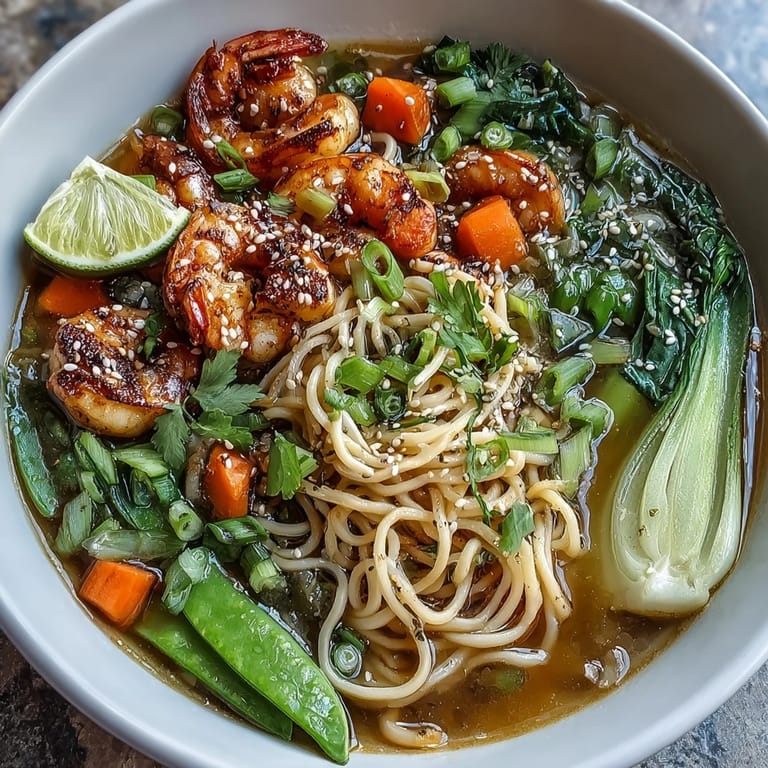
- Top each bowl with sliced spring onions, cilantro if you're using it, a generous sprinkle of sesame seeds, and a lime wedge on the side. Squeeze the lime right before eating—it's the difference between a good bowl and one that feels bright and alive.
 Pin it
 There was this moment when my roommate came home while I was finishing this bowl, and the smell hit them before anything else—they just stood in the kitchen doorway and watched me work, asking quiet questions about what was happening in the pot. By the time we sat down to eat, it wasn't just food anymore; it was this little shared experience of warmth and care in the middle of an ordinary evening.
Flexibility Is the Point
Once you've made this once, you'll start seeing it as a template rather than a strict recipe. I've made it with mussels instead of scallops, swapped in soft tofu for a vegetarian version, added mushrooms for earthiness, and even threw in some baby corn on nights when I had it hanging around. The broth is forgiving as long as you keep those core aromatics—ginger, garlic, and that balance of soy and fish sauce—everything else can bend to whatever you have available.
Timing and Preparation
The beauty of this dish is that almost everything can be prepped ahead—chop your vegetables in the morning, have your noodles cooked and rinsed, even measure out your broth ingredients into a bowl. Then when you're actually cooking, it's just a matter of heating, combining, and watching the pot for about ten minutes. This is genuinely helpful on nights when you want something special but don't have the energy for a long cook time.
Pairing and Serving Suggestions
If you're going to open wine, a crisp Riesling is perfect—the slight sweetness and acidity play beautifully with the broth's savory depth. A light lager works too if you're in a beer mood, something that won't overpower the delicate seafood but will refresh your palate between spoonfuls. This recipe serves four generously, or three if everyone's really hungry, and it doesn't reheat especially well, so really lean into making it fresh and eating it immediately while everything's still steaming.
- Serve immediately in heated bowls so the noodles stay warm and the broth doesn't cool down too quickly.
- Set out small bowls of extra lime wedges, cilantro, and sesame seeds so people can add more if they want.
- Have a side of sriracha or your favorite hot sauce available for anyone who wants extra heat beyond the chili paste.
 Pin it
 This bowl has become one of those recipes that feels special enough to make for guests but easy enough to make on an ordinary Wednesday when you want something that tastes like you care. That's the real magic of it.