 Pin it
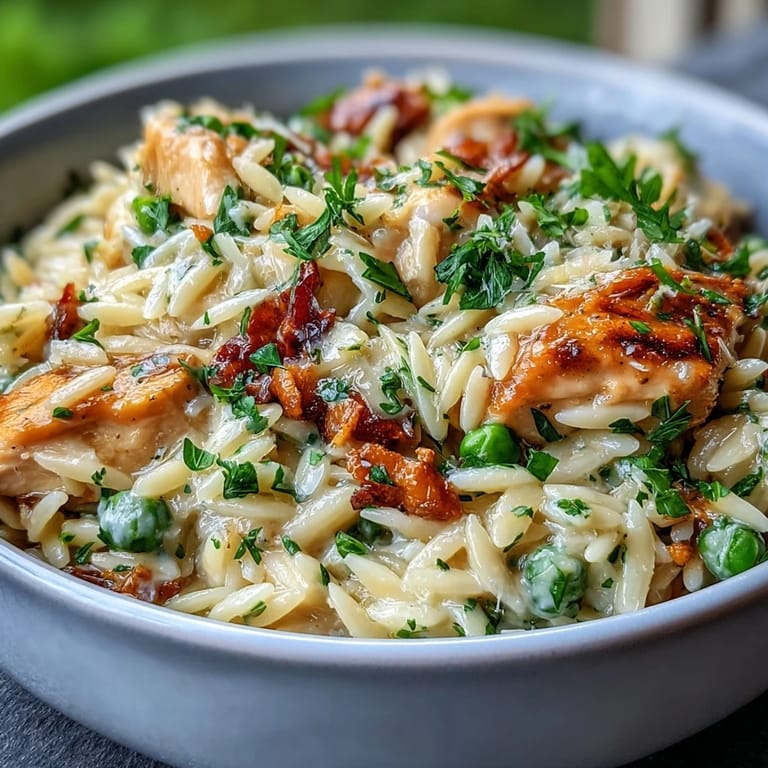
 The unmistakable aroma of sautéing onion and lemon always reminds me of early spring evenings when sunlight would spill into my kitchen, coaxing everyone to linger a little longer around the stove. One-pot lemon orzo with chicken and peas became an accidental staple after I scrambled to use leftover chicken and a handful of frozen peas. There's a satisfying pleasure in stirring the creamy orzo, watching it soak up those bright flavors. Every time I zest a lemon over the bubbling pot, I catch myself smiling, certain that something good is about to happen. It's just the sort of meal that promises both freshness and comfort in equal measure.
The first time I made this for friends, we hovered around the stove, trading stories and tasting the broth to decide if it needed more lemon. Someone spilled peas onto the floor, and we all laughed as the dog raced to clean up the evidence. The meal itself was devoured before I even managed to plate it properly. There was a happy chaos in the kitchen, and that's how this recipe earned its place as a go-to for impromptu gatherings. It's now unofficially dubbed as our 'good mood food' whenever the weather calls for something bright.
Ingredients
- Boneless, skinless chicken breasts: Cutting the chicken into even pieces helps everything cook quickly and ensures juicy bites.
- Frozen green peas: Thaw them first—they add sweetness and a tender pop of spring without losing their color.
- Yellow onion: Chopped finely, the onion melts into the orzo and builds a mellow base for the dish.
- Garlic: Minced garlic brings warmth, but don't let it burn—just a golden hue will do.
- Lemon (zest and juice): Fresh zest and juice brighten every spoonful; zest first, then juice for max flavor.
- Fresh parsley: Stirred in at the end, parsley gives that final herbal lift; use the leaves for best texture.
- Orzo pasta: Toast it briefly before the broth—this brings a subtle nutty note and keeps the pasta from getting mushy.
- Parmesan cheese: Grate your own for creaminess—store-bought can leave the dish gritty.
- Unsalted butter: A couple tablespoons add richness and silkiness to the base.
- Low-sodium chicken broth: Start with low-sodium and season yourself; it allows the lemon and herbs to shine.
- Olive oil: For sautéing, pick an oil you enjoy—a peppery one adds depth.
- Dried oregano: Just a pinch for Mediterranean aroma—don't overdo, or lemon gets lost.
- Salt: Season as you go; taste before you finish, since Parmesan adds saltiness.
- Freshly ground black pepper: A small grind wakes up flavors, but avoid excess that might mask the citrus.
Tired of Takeout? 🥡
Get 10 meals you can make faster than delivery arrives. Seriously.
One email. No spam. Unsubscribe anytime.
Instructions
- Sauté the chicken:
- Heat olive oil until it shimmers, then add chicken, salt, pepper, and oregano. Let the pieces sizzle and turn golden while you toss them gently, then set aside before they dry out.
- Sweat the aromatics:
- Drop butter and onion into the same pot, hearing the hiss as they soften. Stir in garlic just before the onion turns translucent, letting its scent bloom for another minute.
- Toast the orzo:
- Add orzo and stir continuously for 1–2 minutes—listen for the faint crackle, and watch the pasta take on a pale golden tint.
- Add the broth and simmer:
- Pour in chicken broth, bringing it to a gentle boil. Cover, reduce heat, and simmer for about 8 minutes, stirring once or twice so nothing sticks.
- Return chicken and add greens:
- Return chicken to the pot, then toss in peas, lemon zest, and juice. Let everything mingle as the orzo finishes cooking and most liquid is absorbed.
- Finish and serve:
- Remove from heat, then stir in Parmesan and parsley until creamy and flecked with green. Taste, adjust seasoning, and serve piled high with extra zest or cheese if you wish.
 Pin it
 One night, after a long walk in the drizzle, I came home with cold hands and an appetite for something soothing. This lemony chicken orzo hit the spot, filling the apartment with tangy steam and calming chatter as everyone dove in for seconds. It's amazing how a single pot can turn ordinary ingredients into a memory shared by everyone at the table.
Springtime Cooking Joys
Peas always remind me of spring; tossing them in last keeps their color and pop. I've learned not to defrost them too early—just enough to be ready, but still cool, so they don't overcook. There's something satisfying about scraping lemon zest and watching tiny curls land like confetti.
Swapping Proteins and Add-ins
I'm not precious about sticking to chicken—shrimp adds a briny twist, or tofu makes it vegetarian-friendly. Sometimes, depending on who's coming for dinner, I shake things up with mushrooms or even a handful of spinach. It's a forgiving recipe that plays well with whatever's forgotten in your fridge.
Serving and Leftover Tips
I've discovered this tastes just as good the next day; a splash of broth during reheating brings back the creamy consistency. If you make it ahead, don't add the parsley until right before eating, so it stays lively. The lemon keeps it bright, even after a night in the fridge.
- Cover leftovers tightly to keep them from drying out.
- A quick microwave burst works best, but stir halfway through.
- Never forget that extra Parmesan is a day-brightener.
 Pin it
 This dish brings sunshine to your table as soon as you need it, even on grey days. I hope it sparks its own little moment for you, just as it has for me.
Recipe FAQs
- → How do I make the orzo extra creamy?
Stir in a splash of heavy cream just before serving, or let the Parmesan melt fully into the orzo for added richness.
- → Can I substitute the chicken?
Yes, shrimp or tofu work well, adjusting the cooking times so they remain tender and flavorful.
- → What wine pairs well with this dish?
A light Sauvignon Blanc or Pinot Grigio enhances the citrus and savory flavors beautifully.
- → Is this dish gluten-free?
No, orzo contains gluten. For a gluten-free version, use rice or gluten-free pasta instead.
- → How can I add more veggies?
Add chopped spinach, asparagus, or fresh herbs for extra color and nutrition without affecting the cooking process.
- → What tools are needed?
You'll need a large deep skillet or Dutch oven, measuring tools, a zester, and a wooden spoon or spatula.