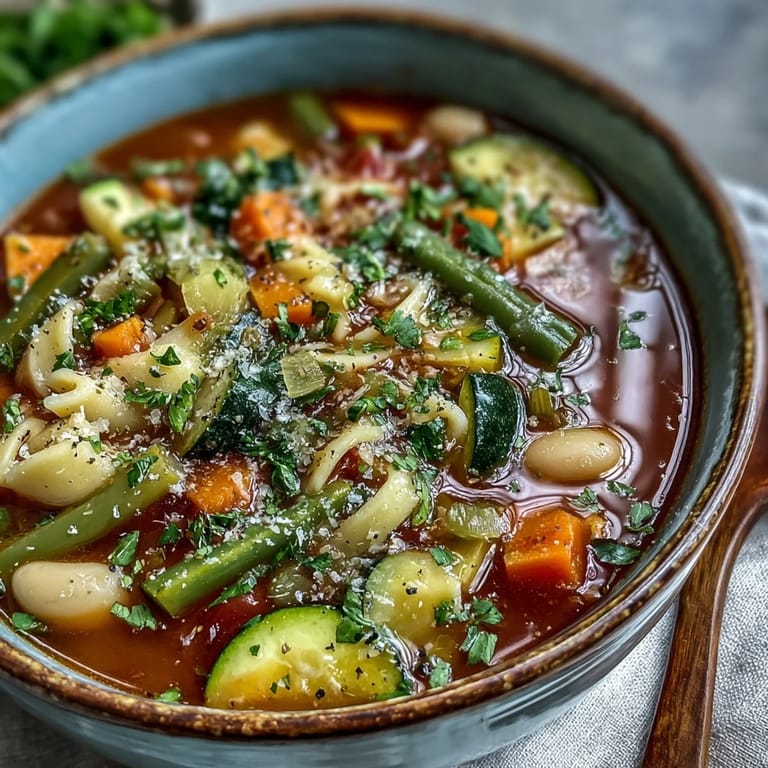
 Pin it
 My neighbor Marco taught me that minestrone isn't really a recipe so much as a conversation between you and whatever vegetables happen to be sitting in your crisper drawer. One rainy October afternoon, he invited me over and started chopping with the kind of casual confidence that comes from making the same soup a hundred different ways. What struck me wasn't the technique—it was how he kept tasting and adjusting, explaining that minestrone is less about following rules and more about listening to what the soup needs on that particular day.
I made this soup for my book club once on a Tuesday night in late spring, and someone brought a salad, someone brought wine, and I brought minestrone in a big ceramic pot. By the end of the evening, three people had asked for the recipe, but what I remember most is how one of them came back into the kitchen and just stood there watching it bubble on the stove, talking about her grandmother's kitchen in Naples. Food has a way of opening doors like that.
Ingredients
- Olive oil: Two tablespoons of good olive oil is where this whole thing begins, and it should smell alive when it hits the pot—use something you'd actually taste on bread.
- Onion, carrots, and celery: This is the holy trinity that Marco calls the foundation, and yes, it matters that you dice them all roughly the same size so they cook evenly.
- Garlic: Three cloves minced fine, added after the softer vegetables so it doesn't burn and turn bitter on you.
- Seasonal vegetable: Summer means zucchini, winter means butternut squash—the soup knows the difference even if you don't, and it tastes better when you pay attention to the season.
- Green vegetables: Fresh green beans in warm months, hearty kale or spinach when it's cold, and the soup actually adjusts its personality based on what you choose.
- Diced tomatoes: One can, and don't drain them—that liquid is flavor you'd be throwing away.
- Vegetable broth: One and a half liters of something you actually like drinking, because it's the base of everything that follows.
- Cannellini or borlotti beans: One drained and rinsed can, and rinsing them really does matter for the final taste.
- Small pasta: Ditalini or elbow shapes work best because they don't disappear into the broth, and they finish cooking right around the same time the vegetables do.
- Bay leaf, oregano, and basil: Dried herbs are fine here—this soup isn't fussy about it—but the bay leaf should come out before serving or someone will find it and wonder why.
- Fresh parsley: Save some for the bowl because it's the final note, bright and green against everything warm underneath it.
Tired of Takeout? 🥡
Get 10 meals you can make faster than delivery arrives. Seriously.
One email. No spam. Unsubscribe anytime.
Instructions
- Start with the holy trinity:
- Heat your olive oil over medium heat and add the diced onion, carrots, and celery all at once. You'll know they're ready when the kitchen starts smelling like cooking and the vegetables have softened enough that a fork slides through them easily, about five minutes.
- Bring in the aroma:
- Stir in your minced garlic along with the seasonal vegetable and green beans or kale, letting them soften for just three minutes so the garlic doesn't burn. You're looking for that moment when everything starts releasing its smell into the pot.
- Build the base:
- Add your canned tomatoes, the potato if you're using one, and that bay leaf, then let it all sit together for two minutes before pouring in the broth. This pause lets the flavors start talking to each other before the liquid arrives.
- Let time work:
- Bring everything to a boil, then turn the heat down and let it simmer for fifteen minutes. Walk away if you need to—this is the soup's moment to develop depth while you're doing something else.
- Finish the dish:
- Add your beans and pasta and let them simmer together uncovered for ten to twelve minutes, stirring occasionally so nothing sticks to the bottom. The pasta will tell you when it's ready because you can taste it.
- Season and serve:
- Stir in your oregano, basil, parsley, salt, and pepper, fishing out the bay leaf so no one bites into it. Ladle it into bowls while it's steaming and top with Parmesan if that's your way, but honestly, it's beautiful on its own.
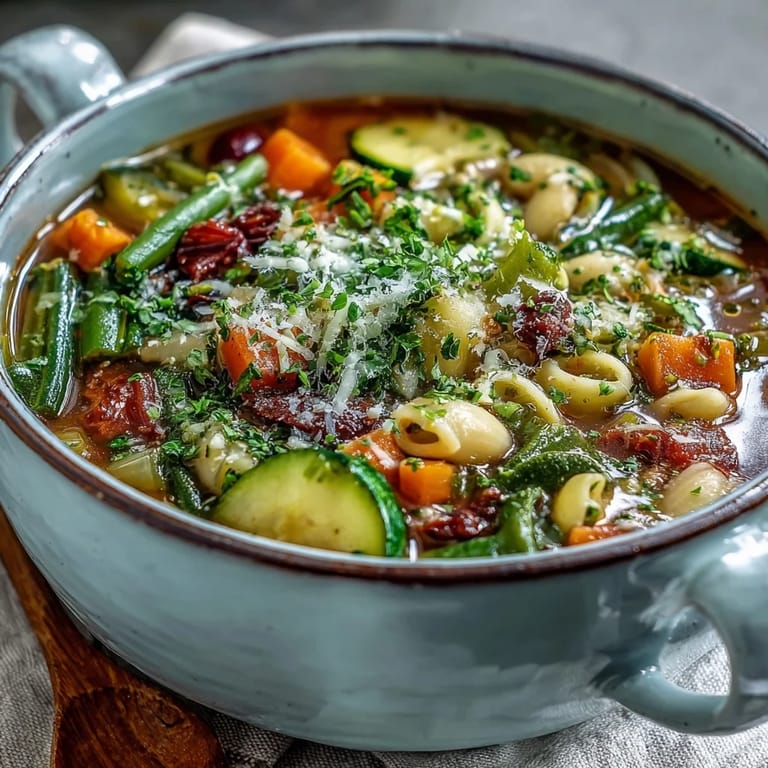 Pin it
 There's something about a pot of minestrone that makes people slow down. My daughter came home from school on a cold day last January, tasted this soup, and asked if we could make it again next week and the week after that, and suddenly we had a ritual. Soup shouldn't feel revolutionary, but somehow this one was.
Adapting for the Season
The best version of minestrone is always the one you make when your farmers market is bursting with what the season wants to give you. In spring, throw in fresh peas and leeks and young spinach. Summer means zucchini, tomatoes that taste like they remember the sun, and green beans. Fall brings butternut squash and kale and maybe some cabbage. Winter is your moment for root vegetables and heartier greens. The soup doesn't have rules—it just has seasons, and respecting that difference makes every version taste like home.
The Vegan Switch
If you're cooking for someone who doesn't eat cheese or you're just curious about the vegan version, this soup doesn't miss a thing. Omit the Parmesan or swap it for something plant-based, and the rest of the ingredients were already doing their job. What surprised me is that minestrone actually tastes more like the vegetables when you take away the cheese—you notice the tomato more, the beans more, the broth more. Sometimes subtraction teaches you something about what was there all along.
Why Minestrone Matters More Than You Think
Minestrone is peasant food in the best possible way, which means it was born from ingenuity and respect for what you have. It taught me that cooking doesn't always need technique or special ingredients or hours of your time—sometimes it just needs attention and willingness to work with what's in front of you. That's a lesson that extends past the kitchen into everything else.
- Make this soup when you need something that fills the house with warmth, because it does that quietly and completely.
- Leftovers actually improve in the refrigerator, so make extra and eat it for lunch three days running.
- A crusty piece of bread and a drizzle of your best olive oil on top turns a simple bowl of soup into something people remember.
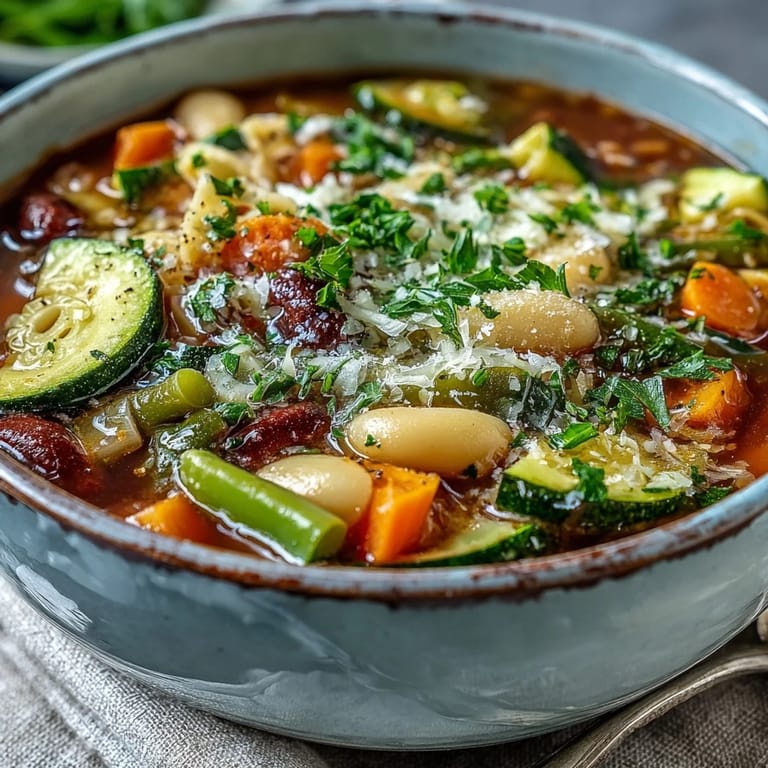 Pin it
 Make this soup when you need to remember that good food doesn't have to be complicated to be exactly what you need. It will feed you, warm you, and teach you something about listening to vegetables.
Recipe FAQs
- → Can I use different types of beans?
Yes, cannellini and borlotti beans work wonderfully, but you can also substitute with kidney beans, chickpeas, or white beans based on your preference.
- → What vegetables work best for winter variations?
For colder months, use butternut squash, kale, savoy cabbage, or leeks. These heartier vegetables add warmth and substance to the soup.
- → How can I make this gluten-free?
Simply replace regular pasta with your favorite gluten-free variety. Corn or rice-based pasta shapes like elbows or shells work perfectly.
- → Can I prepare this ahead of time?
Absolutely. The soup stores well in the refrigerator for up to 4 days. Note that pasta may absorb liquid over time, so add extra broth when reheating if needed.
- → What's the best way to add more depth of flavor?
Adding a Parmesan rind while the soup simmers infuses incredible umami flavor. You can also finish with high-quality extra virgin olive oil and fresh herbs.
- → Is this soup freezer-friendly?
Yes, though it's best to freeze without the pasta. Cook and add fresh pasta when reheating to maintain the best texture.