 Pin it
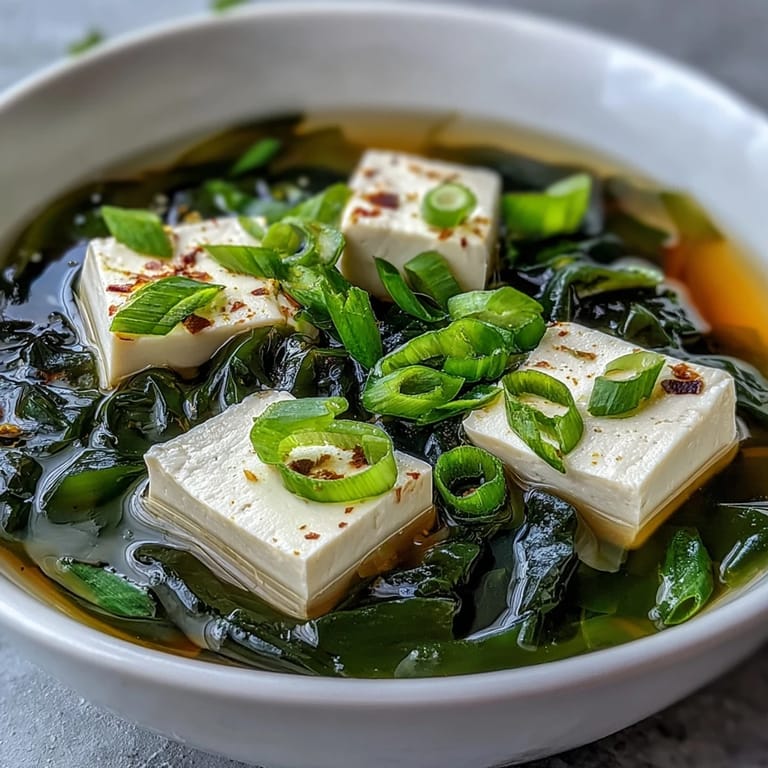
 My first wakame soup came together on a quiet Tuesday evening when I realized I had nothing substantial in the kitchen except a packet of dried seaweed and some tofu pushing its expiration date. What emerged from that small saucepan turned out to be exactly what I needed—something warm, light, and surprisingly comforting despite its simplicity. The umami depth of the broth caught me off guard; I'd expected something delicate but instead found myself tasting layers of ocean and earth in every spoonful. Now I make it whenever I need to reset, or when I want to prove to myself that the most nourishing meals don't require complicated technique.
I served this to my partner on an evening when they came home exhausted, and watching them slow down with each spoonful reminded me why Japanese cooking holds so much power in everyday moments. There's something about the ritual of sipping soup from a small bowl, the steam warming your face, that shifts an entire mood. They asked for seconds, which never happens, and I realized this soup had done exactly what it was meant to do.
Ingredients
- Dried wakame seaweed: Eight grams might seem impossibly small, but this stuff expands and releases all its mineral richness into the broth; if you can find it at an Asian market rather than online, you can examine the color and freshness first.
- Dashi stock: This is where the flavor lives, so use a proper vegetarian dashi made from kombu and shiitake if you can, rather than instant packets that taste like the ocean forgot what it meant to taste like.
- Silken or firm tofu: Silken holds its delicate texture better in broth, but firm tofu gives you more substance if you're eating this as a main course rather than a starter.
- Scallions: The brightness and slight bite of fresh scallions matters here; keep them separate until serving so they don't get lost in the heat.
- White miso paste: This is crucial—white miso is milder and sweeter than red, and it won't overpower the delicate seaweed; tempering it in hot broth before adding it back prevents it from clumping and separates the good paste from the grainy stuff.
- Soy sauce: Use tamari if you need gluten-free, and add it slowly so you can taste as you go.
- Sesame oil: Optional but not really; a teaspoon at the end adds a whisper of richness that makes people ask what the secret ingredient is.
Tired of Takeout? 🥡
Get 10 meals you can make faster than delivery arrives. Seriously.
One email. No spam. Unsubscribe anytime.
Instructions
- Rehydrate the wakame:
- Soak your dried seaweed in cold water for five minutes until it unfurls and softens, then drain it thoroughly so you're not adding extra water to your broth. The wakame will roughly triple in volume, which is always a small magic.
- Bring the broth to life:
- Pour your dashi into a medium saucepan and let it come to a gentle simmer over medium heat—you want small bubbles, not an aggressive rolling boil that will destroy the delicate flavors. Listen for the quiet sound of simmering rather than the aggression of a full boil.
- Add the tofu and wakame:
- Drop in your cubed tofu and drained wakame, then let everything simmer together for two to three minutes until the tofu is warmed through and the wakame releases its essence into the broth. Watch how the soup transforms from simple to complete in those few minutes.
- Temper and blend the miso:
- This step prevents lumpy miso paste from ruining your soup—scoop a ladleful of hot broth into a small bowl, add your miso paste, and stir it smooth before pouring it back into the pot. This matters more than you'd think, and it's where impatient cooks end up with grainy soup.
- Season and finish:
- Add your soy sauce and sesame oil if using, stir gently, then let everything heat for one more minute without allowing the broth to boil again, which would kill the delicate umami notes. You're almost done at this point, so don't rush the last minute.
- Serve with intention:
- Pour the soup into small bowls and top with your sliced scallions while everything is still steaming, so they stay bright and slightly crisp against the warm broth. This is the moment where simple soup becomes something you actually want to eat.
 Pin it
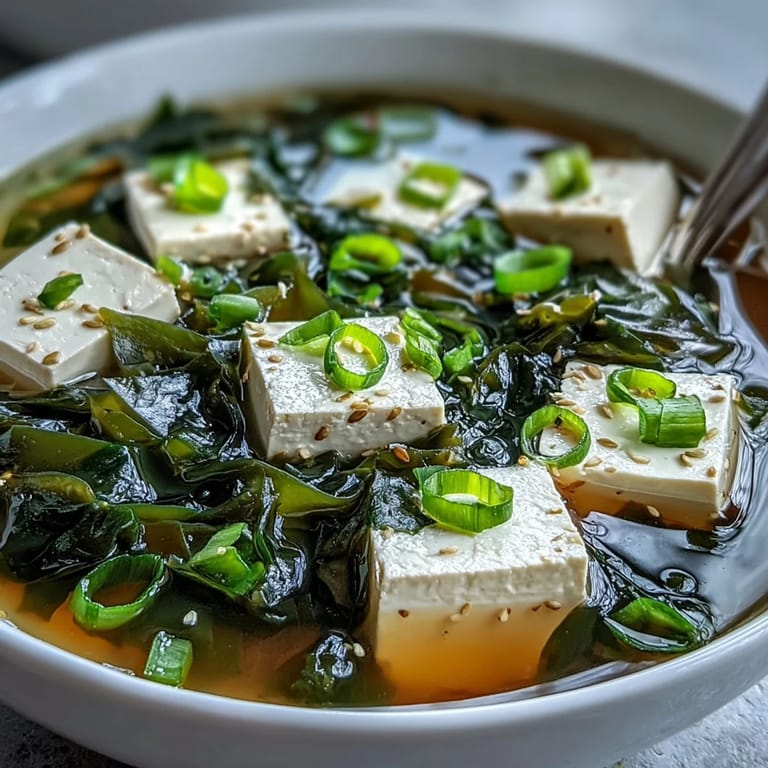
 There was a morning when my neighbor stopped by as I was making this, and the smell of warm dashi with sesame oil pulled them into my kitchen before I could even offer. We ended up sharing a bowl while standing at my counter, talking about nothing in particular, and I realized soup has this quiet power to turn ordinary moments into something worth remembering. That's when I knew this recipe would become permanent in my rotation.
The Seaweed Question
Most people feel uncertain about wakame the first time they handle it, worried they're doing something wrong or that seaweed in soup sounds strange. But dried wakame is one of the most straightforward ingredients you'll ever work with—it softens predictably, it tastes clean and slightly sweet, and it brings a nutritional density that regular vegetables simply can't match. Once you understand that wakame is less about being adventurous and more about being practical, the ingredient stops feeling intimidating and starts feeling obvious.
Building Layers of Flavor
Japanese cooking teaches you that simplicity doesn't mean lacking depth, and wakame soup proves this philosophy in a bowl. The dashi provides the foundation, the tofu adds subtle richness, the wakame brings mineral notes and umami, and the miso ties everything together into something that tastes far more complex than its ingredient list suggests. This is intentional construction rather than accidental luck, which means understanding how each element contributes helps you see why you can't just swap things out randomly.
Making This Your Own
While wakame soup is perfect as written, it's also forgiving enough to accommodate your preferences and whatever you have on hand. I've added mushrooms on mornings when I wanted earthiness, spinach when I wanted color, and ginger when I was fighting a cold. The structure stays the same but the soup becomes yours rather than a recipe you're following, which is usually when food stops being instructions and starts being cooking.
- Add thinly sliced mushrooms or spinach in the final minute of cooking if you want more body and nutrition.
- A small piece of fresh ginger simmered with the dashi transforms this into something remedial on days when you need it most.
- Keep the scallions raw and fresh—they're the final bright note that keeps this soup from feeling heavy even though it nourishes completely.
 Pin it
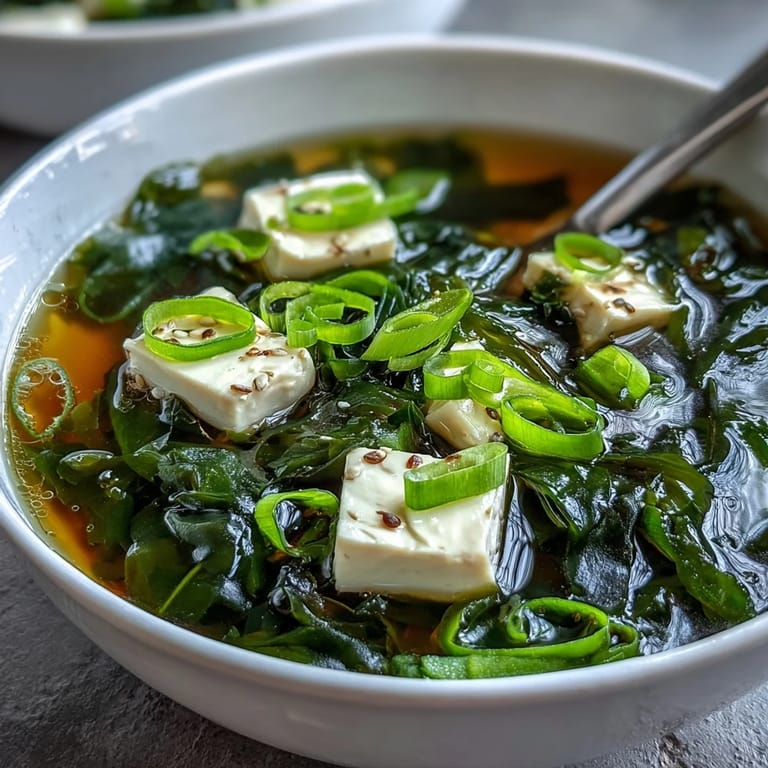
 This soup has become my answer to so many kitchen moments—when I need something ready quickly, when someone needs comfort without heaviness, when I want to prove that cooking doesn't require stress. Make it once and you'll understand why it's been feeding people for centuries.
Recipe FAQs
- → What is wakame seaweed?
Wakame is a nutritious brown seaweed commonly used in Japanese cuisine. When dried and rehydrated, it becomes tender with a subtle ocean flavor and silky texture.
- → Can I make this vegan?
Yes, simply use kombu and shiitake mushroom dashi instead of fish-based dashi stock. Check your miso paste label to ensure it contains no bonito flakes.
- → Why shouldn't I boil the miso?
Boiling miso paste destroys its beneficial probiotics and can make the flavor bitter. Always remove the soup from heat or keep it at a gentle simmer when adding miso.
- → How do I store leftovers?
Store cooled soup in an airtight container for up to 2 days. Reheat gently without boiling to preserve the miso's flavor and nutritional benefits.
- → What vegetables can I add?
Sliced mushrooms, shredded carrots, baby spinach, or snow peas work wonderfully. Add heartier vegetables like carrots during simmering, and delicate greens like spinach just before serving.