 Pin it
 My friend texted me a photo of her new apartment keys the morning she moved in, and I knew exactly what I needed to do. By that evening, I was standing in my kitchen arranging cured meats and cheeses on a wooden board, thinking about how a good charcuterie board isn't really about the fancy ingredients—it's about creating a moment where people can relax, eat with their hands, and actually talk to each other. She opened her door to find this sprawling, colorful board waiting, and watching her face light up made me realize that sometimes the best housewarming gift isn't something wrapped in paper.
I've made this board three times now, and each time the energy shifts the moment people see it. At my neighbor's housewarming last month, I watched two strangers discover they both loved the same obscure gouda, and suddenly they were deep in conversation about farmers markets. That's when it hit me—a charcuterie board is actually a conversation starter hiding behind gorgeous food.
Ingredients
- Prosciutto (120 g): The delicate, salty foundation that makes everything around it taste better; buy it sliced fresh from the deli counter if you can, it tears less.
- Salami (120 g): Pick a variety with good color and marbling—it's the workhorse ingredient that fills gaps and adds visual interest.
- Smoked ham (120 g): A familiar friend that appeals to people hesitant about cured meats; slice it into quarters for easy grabbing.
- Chorizo slices (100 g): The spicy moment that makes people notice and remember your board.
- Brie (150 g): Creamy, crowd-pleasing, and it needs to be at room temperature or it won't spread properly on crackers.
- Aged cheddar (150 g): Cut it into cubes rather than slices—it catches light differently and looks more intentional.
- Gouda (120 g): Mild and buttery, it's the bridge cheese that connects bold flavors to softer palates.
- Blue cheese (100 g): Crumbled, not sliced, so people who love it can grab a pinch and those who don't can easily skip it.
- Hummus (100 g): Transfer it to a small ceramic bowl; it transforms from jarred to homemade-looking instantly.
- Tzatziki (100 g): Cool and herbaceous, it's the unexpected dip that makes the board feel thoughtful rather than lazy.
- Roasted red pepper dip (100 g): Sweet and smoky, it pairs beautifully with crackers and vegetables.
- Assorted crackers (150 g): Mix water crackers, multigrain, and anything with seeds; variety prevents the board from feeling one-note.
- Baguette slices (100 g): Toast them lightly or serve at room temperature—slightly crispy makes them hold toppings better.
- Breadsticks (100 g): These lean against other items at angles, creating height and visual drama.
- Red and green grapes (2 cups total): Their color does half the work for you; they're edible garnish that actually tastes good.
- Cherry tomatoes (1 cup): Halve them if they're large so they're not awkward to eat in one bite.
- Cucumber slices (1 cup): Cut them thick enough to hold toppings, thin enough to eat easily.
- Red bell pepper (1 whole): Slice into strips that lean naturally; the color contrasts beautifully against darker meats.
- Baby carrots (1 cup): Leave them whole for visual appeal and because dipping is part of the experience.
- Mixed nuts (½ cup): Toast them lightly with a pinch of salt an hour before serving for a warm, toasted flavor.
- Olives (½ cup): Buy them already pitted unless you enjoy watching guests fish for pits mid-conversation.
- Dried apricots (¼ cup): Sweet and chewy, they remind people that this board isn't just savory.
- Dried figs (¼ cup): Cut them in half so their jewel-like interior shows; they pair unexpectedly well with salty meats.
- Fresh herbs (rosemary and thyme): Sprinkle them on top at the very last second; they wilt quickly but smell incredible.
Tired of Takeout? 🥡
Get 10 meals you can make faster than delivery arrives. Seriously.
One email. No spam. Unsubscribe anytime.
Instructions
- Start with the foundation:
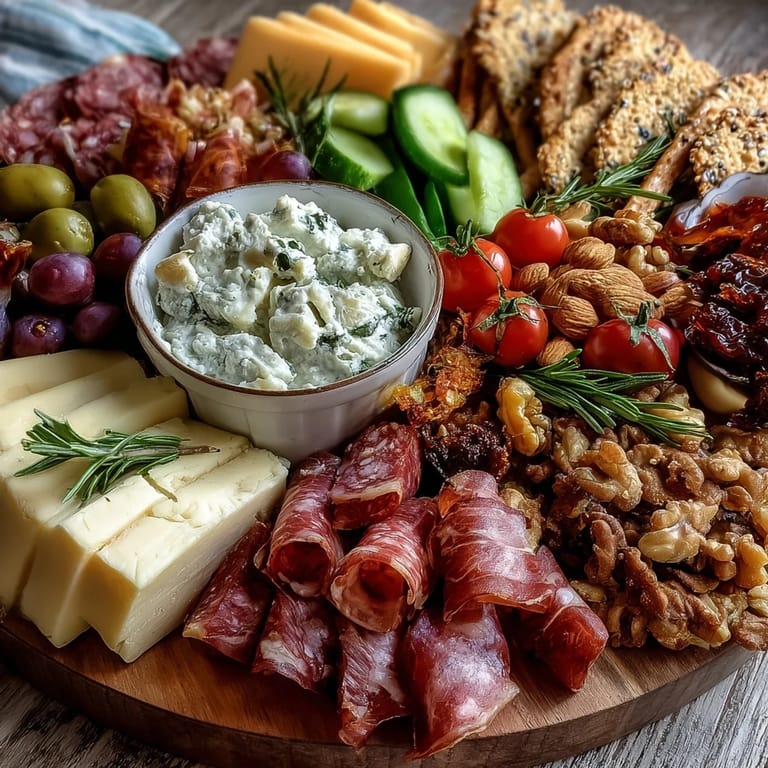
- Arrange your cured meats in loose, organic folds across the board—think texture and movement, not perfect symmetry. Let them cascade and overlap so there's visual interest from every angle.
- Anchor with cheeses:
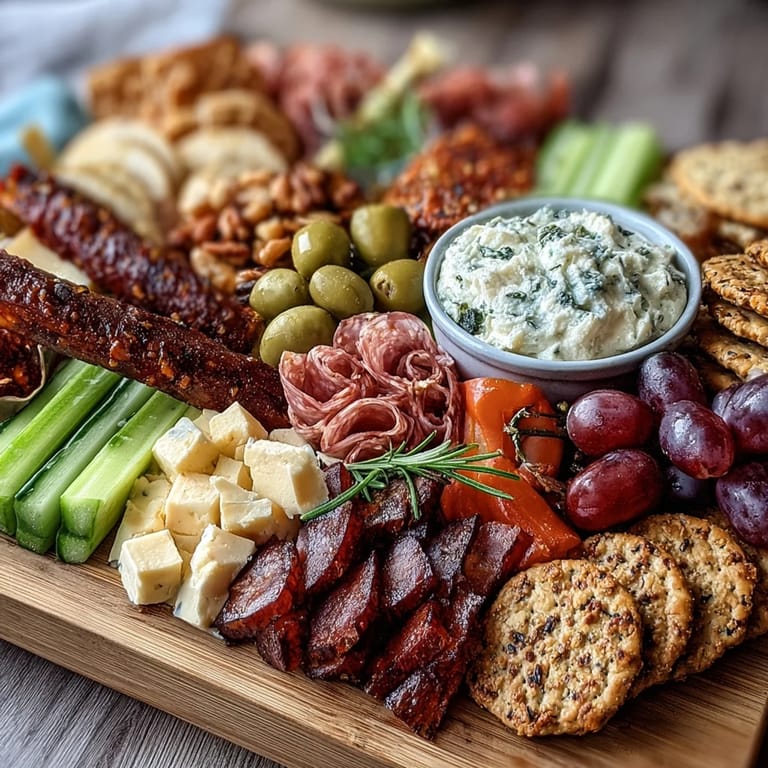
- Place your cheese varieties around the board in a loose triangle or scattered pattern, spacing them so no single type dominates. This creates natural stopping points for people's eyes.
- Nest the dips:
- Pour each dip into its own small bowl and tuck them into pockets between meats and cheeses where they look intentional rather than awkwardly placed. Leave a small spoon in each one so people know they're meant to be shared.
- Create cracker architecture:
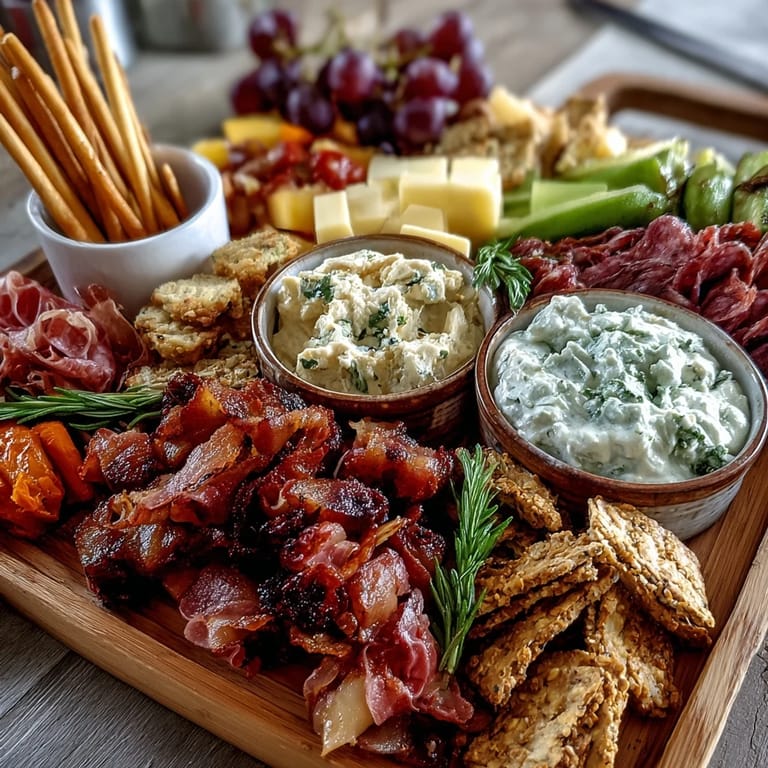
- Fan your crackers in overlapping rows, stand breadsticks upright in clusters, and lean baguette slices against other elements to add height. This prevents the board from looking flat.
- Fill negative space with color:
- Use grapes, tomatoes, cucumber, and peppers to fill gaps between everything else, arranging them in small clusters rather than scattered randomly. Let colors play off each other—reds next to greens, pale yellows next to deep purples.
- Scatter the small treasures:
- Distribute nuts, olives, apricots, and figs in small pockets across the board, creating little flavor surprises that reward people for exploring every corner. Think of them as the punctuation marks that complete the composition.
- Finish with flourish:
- Pull fresh herb sprigs apart and scatter them across the top, focusing on spots where they'll catch light and add fragrance. Don't underestimate how much the smell contributes to the experience.
- Serve and replenish:
- Set the board out at room temperature and watch it come alive as people gather around it. Keep small backup portions nearby so you can refresh depleted areas without letting it look picked-over.
 Pin it
 The most memorable moment with a charcuterie board happened when my partner's elderly aunt pulled me aside and said it reminded her of a market she visited in Italy fifty years ago. She spent the next hour telling stories about different cheeses and meats to anyone who would listen, and suddenly the board became a portal to her memories. Food that sparks connection like that feels like small magic.
The Art of Building Height and Movement
A flat board is a boring board, and I learned this the hard way when my first attempt looked more like a sad cafeteria spread than an elegant centerpiece. Now I think of the board as a small landscape—breadsticks become trees, cheese cubes become buildings, and everything else fills in the terrain. Lean things against each other, let meats drape and fold, and don't be afraid of a little chaos. The slight imperfection makes it look real and inviting rather than like it came from a magazine.
Wine Pairing and Timing
Serve this board with a crisp white wine like Sauvignon Blanc or a light red like Pinot Noir—the acidity cuts through the richness of the cheeses and meats beautifully. If wine isn't your thing, sparkling cider or even a good mineral water work just fine. The beauty of this board is that it doesn't demand anything fancy to accompany it; it stands on its own.
Customization and Dietary Considerations
The skeleton of this board is flexible, and I've made countless versions depending on who's coming. For vegetarian guests, double down on cheeses, nuts, and dried fruits—add a whipped goat cheese or marinated artichokes for interest. For anyone avoiding gluten, swap crackers for gluten-free options and skip the baguette entirely. The magic is that a charcuterie board accommodates preferences without requiring two separate spreads.
- Keep a dedicated gluten-free section on one side if you have guests with sensitivities—cross-contamination matters.
- Add a small dish of honey or fig jam as a luxury touch that makes people feel genuinely thought-about.
- Label anything that contains common allergens so everyone can eat confidently.
 Pin it
 This board has shown up at birthday celebrations, weeknight gatherings, and moments when I needed to feel generous without spending hours cooking. It's the recipe that reminds me that hospitality doesn't have to be complicated to feel deeply welcoming.
Recipe FAQs
- → How should I arrange the meats and cheeses?
Arrange cured meats in loose folds or rolls, spacing cheeses evenly for easy access and visual appeal on the board.
- → What dips pair well with this board?
Hummus, tzatziki, and roasted red pepper dip complement the meats, cheeses, and crackers with varied creamy textures and flavors.
- → Can I substitute ingredients for dietary needs?
Yes, you can swap meats and cheeses or use gluten-free crackers to accommodate different dietary preferences and restrictions.
- → What fresh produce enhances the platter?
Use grapes, cherry tomatoes, cucumber slices, bell pepper, and baby carrots to add color, freshness, and crunch.
- → How can I keep the board fresh if not serving immediately?
Cover the board tightly and refrigerate until serving, then bring to room temperature for optimal flavor and texture.
- → What drinks complement this spread?
A crisp white wine or a light red pairs well, balancing the richness of meats and cheeses with refreshing acidity.