 Pin it
 It always amazes me how a pavlova’s delicate crunch gives way to billowy softness—the first time I made one, I nearly forgot to check the oven timer because I was hypnotized by the gentle whir of the mixer and the sweet aroma wafting through the kitchen. There’s something rather playful about whipping egg whites until they transform into cloud-like peaks, especially on spring afternoons when berries are at their brightest. The floral notes from a nearby vase seemed to mingle with the vanilla as I layered the cream. It’s not a recipe that rushes; it invites you to linger, watch, taste, and assemble with care. This dessert never fails to catch the light and the mood, resting beautifully on the table until someone finally dares to break its shell.
The last time I made this pavlova, I did so with a group of friends crowding my small kitchen, each eager to choose their favorite berry for the topping. Someone spilled a bit of sugar on the floor, and another tried to persuade me to pipe the meringue—but we ended up spooning it anyway, laughing as we shaped the edges. When the dessert was finally cooled, we all hovered, forks at the ready, waiting for the first slice. I still remember someone remarking on how beautiful it looked, like a wreath of fruit and cream. It turned just an ordinary spring evening into something worth celebrating.
Ingredients
- Egg Whites: Room temperature whites whip higher—I learned not to rush this step for fluffiest meringue.
- Superfine Sugar: Helps the meringue dissolve smoothly, creating that shine and stable texture.
- Cornstarch: A small spoonful keeps the center marshmallowy and soft.
- White Vinegar: This bit of acid helps stabilize the structure—don’t skip it.
- Vanilla Extract: Adds warmth and rounds out the sweetness.
- Heavy Whipping Cream: Cold cream whips best, and it’s the lush pillow for your toppings.
- Powdered Sugar: Makes the whipped cream sweet-but-not-too-sweet, gentle on the palate.
- Fresh Berries: Choose strawberries, blueberries, raspberries, blackberries for color and flavor—the juicy burst is essential.
- Fresh Mint: Optional, but it brings a surprising aroma that pairs well with berries.
Tired of Takeout? 🥡
Get 10 meals you can make faster than delivery arrives. Seriously.
One email. No spam. Unsubscribe anytime.
Instructions
- Preheat and Prepare:
- Set your oven to 275°F (135°C)—the gentle heat is key. Draw an 8-inch circle on parchment and flip it over, so the pencil marks don’t touch your meringue.
- Whip the Egg Whites:
- Start with an impeccably clean bowl—any grease ruins the peaks. Beat egg whites on medium until soft peaks form; it will look foamy before it turns glossy.
- Add Sugar Gradually:
- Sprinkle in sugar one spoonful at a time, beating on high. The mixture will thicken and shine, and your patience pays off when it holds stiff peaks.
- Fold in Additions:
- Using a spatula, gently fold in cornstarch, vinegar, and vanilla so you don’t deflate those precious peaks.
- Shape the Meringue:
- Spoon the meringue onto the circle you drew, building up the edges like a nest—slightly higher to hold your cream and berries later.
- Bake and Cool:
- Slide into the oven for 1 hour 15 minutes without peeking. Turn the oven off, prop the door slightly open, and let the pavlova cool completely for that perfect texture.
- Whip the Cream:
- In a clean bowl, whip cream, powdered sugar, and vanilla until soft peaks just hold—watch for the swirl in the beaters.
- Assemble and Decorate:
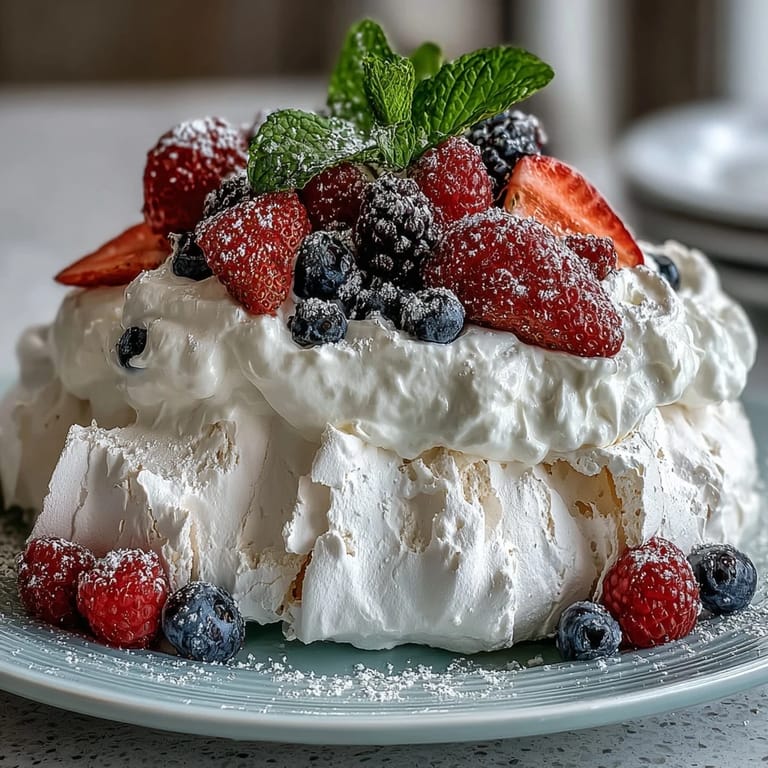
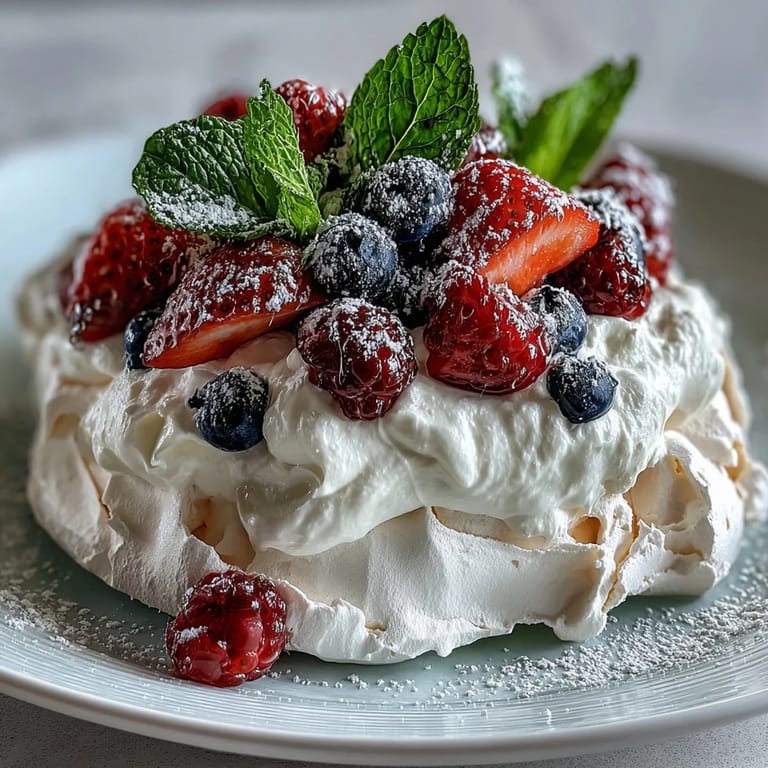
- Gently move the pavlova to your platter. Spread whipped cream in the center, then scatter berries generously; arrange mint if you like.
- Serve:
- Pavlova is best eaten soon after topping. The shell crackles invitingly as you slice through, releasing a fragrant billow of cream and berries.
 Pin it
 When I finally got the pavlova just right, it was during a spring brunch. As soon as the first slice was served, conversation paused while everyone lingered over the layers—crisp, creamy, and berry-bright. That quiet appreciation stuck with me, a moment where food truly set the mood. Sometimes a single beautiful dessert can draw people together, even if just for a few minutes. Pavlova always brings that kind of gentle pause and delight.
Choosing Your Berries
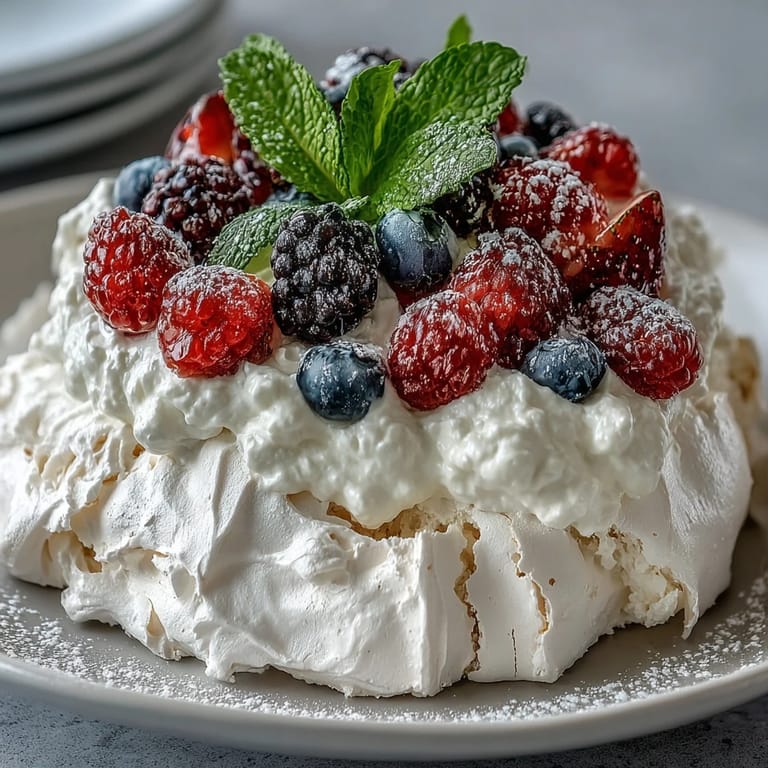
One time I swapped in kiwi and passionfruit when berries weren’t in season, and the pavlova still felt celebratory. It helps to dry the berries with a paper towel after washing so they don’t bleed onto the cream. Mixing berries for color is fun—raspberries add tang, strawberries are mild, blueberries burst with juice. Try arranging them in rings or stripes for a playful pattern. Don’t be afraid to use whatever fresh fruit looks best at the market.
Making Meringue Magic
Egg whites are picky about moisture and cleanliness—a stray yolk or greasy bowl can sabotage the whole batch. I now give mixing bowls a quick wipe with vinegar before starting, just in case. Watching the sugar disappear into the foam is oddly mesmerizing. If you’re baking with kids, let them see the swirls grow glossy—it’s science disguised as dessert. The meringue usually signals readiness with a satiny sheen and peaks that don’t droop.
Serving Pavlova with Flair
Pavlova looks striking when served on a simple platter, letting the berries take center stage. Once, I added edible flowers as garnish, and guests were stunned by the colors. A drizzle of berry coulis or lemon zest can brighten things up for a citrus twist. Mint adds a cool, herbal note that plays nicely with sweet cream.
- Assemble just before serving for the crispiest texture.
- Berries can be gently glazed with warm jam for shine.
- Pavlova leftovers are best eaten within a day—the shell softens quickly.
 Pin it
 Cooking pavlova feels like a celebration in itself, and sharing it always brings smiles. I hope your pavlova cracks open beautifully, with just enough sweetness and a whisper of spring in every bite.
Recipe FAQs
- → What gives pavlova its crisp exterior and soft center?
Beating egg whites to stiff peaks and baking at a low temperature creates a crisp outer layer while maintaining a soft, marshmallow-like interior.
- → Can I use fruits other than berries?
Yes, you can substitute berries with any seasonal fruit such as kiwi, mango, or stone fruit for variation and color.
- → Is this dessert suitable for gluten-free diets?
Absolutely. The pavlova is naturally gluten-free, but always check ingredient labels for cross-contamination.
- → How far in advance can the meringue be prepared?
The meringue can be baked a day ahead and stored in a dry, airtight container. Add toppings just before serving.
- → What tools are necessary for making pavlova?
An electric mixer, mixing bowls, spatula, baking sheet, and parchment paper are essential for best results.
- → Are there any tips for whipping cream?
Use cold cream and chill the mixing bowl. Beat until soft peaks form without over-whipping for a smooth texture.