 Pin it
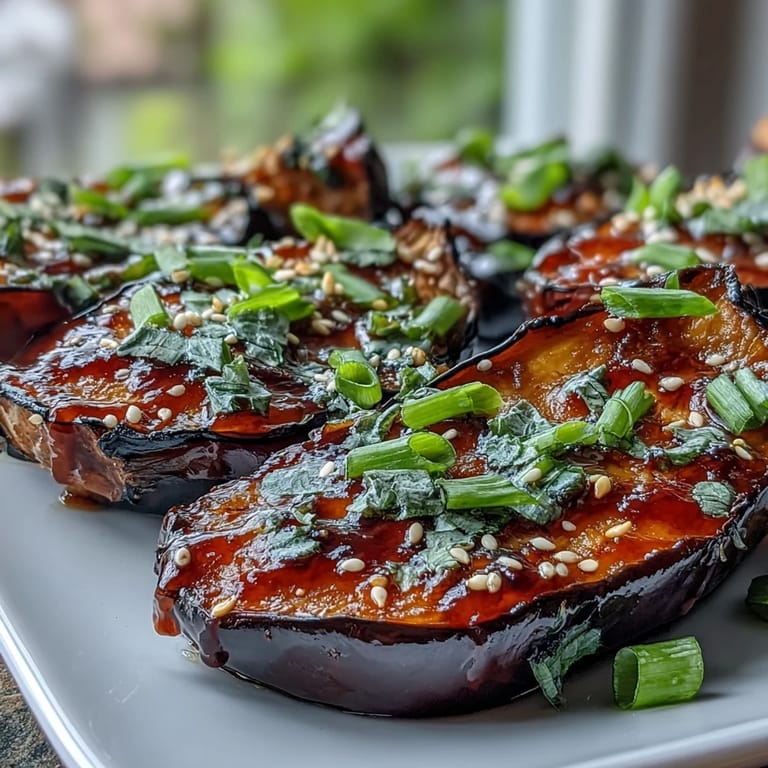
 My first encounter with miso glazed eggplant wasn't planned—it happened on a rainy Tuesday when a Japanese friend texted asking if I could spare some vegetables. She arrived with miso paste, sake, and an easy confidence that made me realize I'd been overthinking eggplant all along. Within minutes, my kitchen smelled like caramelizing umami and toasted sesame, and I understood why this dish had become her go-to when she wanted something that felt both effortless and special.
I remember serving this to my partner after a long week, placing it on the table with zero fanfare—just the two of us and some steamed rice. He took one bite and went quiet in that way that means food has actually landed, not just filled a plate. That quiet moment taught me that the best meals aren't always the ones that take hours; sometimes it's just about choosing ingredients that taste like they already know what they're doing.
Ingredients
- Japanese eggplants: Use two medium ones—they're thinner and have fewer seeds than globe eggplants, so they roast into silky submission rather than turning watery and sulky.
- White miso paste: The sweet, mellow kind that plays nicely with sugar and heat; red miso will overpower everything, trust me on this one.
- Mirin: This rice wine brings natural sweetness and shine to the glaze—if you can't find it, a pinch of sugar mixed with water works but loses some of that glossy elegance.
- Sake: A small splash of cooking sake (or dry sherry in a pinch) cuts through the richness and adds depth.
- Sugar: Just a tablespoon to balance the salty umami of the miso, creating that addictive sweet-savory tension.
- Sesame oil: The toasted kind that smells like a warm hug—it's what turns this from simple to seriously flavorful.
- Toasted sesame seeds: They add the final crunch and visual appeal; buy them already toasted or toast raw ones yourself for about three minutes in a dry pan.
- Green onions: Sliced thin, they bring freshness and mild onion bite that cuts through the richness like a relief.
Tired of Takeout? 🥡
Get 10 meals you can make faster than delivery arrives. Seriously.
One email. No spam. Unsubscribe anytime.
Instructions
- Get your oven ready:
- Preheat to 400°F and line your baking sheet with parchment paper—this prevents sticking and makes cleanup feel like less of a punishment. You're setting yourself up for success here.
- Prepare the eggplants:
- Slice them lengthwise into neat halves, then score the cut side in a crosshatch pattern without cutting through the skin. This scoring thing isn't just for show; it helps the heat penetrate and gives you those golden, tender pockets that are honestly the whole point.
- Give them a light kiss of oil:
- Brush just a little sesame oil on the cut sides and arrange them face-up on your parchment. This is where the caramelization begins, so don't skip it.
- Roast until they're silky:
- Into the oven for 20 to 25 minutes—you're looking for the flesh to turn tender and soft with just a hint of golden color at the edges. The time depends on your eggplants' mood and your oven's honesty, so start checking around the 20-minute mark.
- Make the glaze while they cook:
- Whisk together the miso, mirin, sake, sugar, and remaining sesame oil in a small bowl until it's smooth and glossy. You want no lumps of miso hanging around, so really commit to the whisking.
- Glaze and broil:
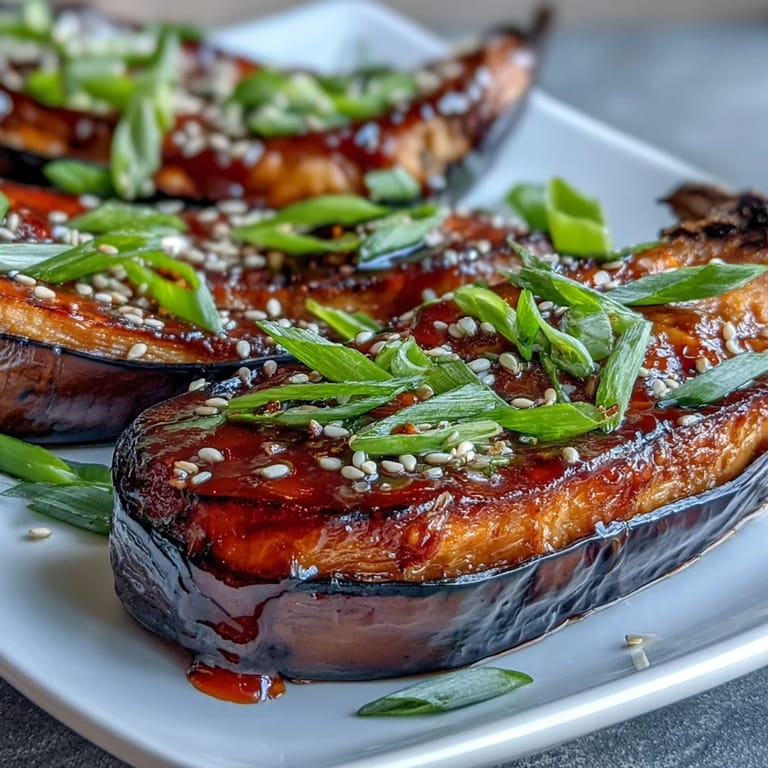
- Spread a generous layer of glaze over each hot eggplant half, then switch your oven to broil and cook for 2 to 3 minutes until the glaze bubbles and caramelizes. Watch it like you're in a tense scene of a movie—that 30-second difference between caramelized and charred is real.
- Finish with ceremony:
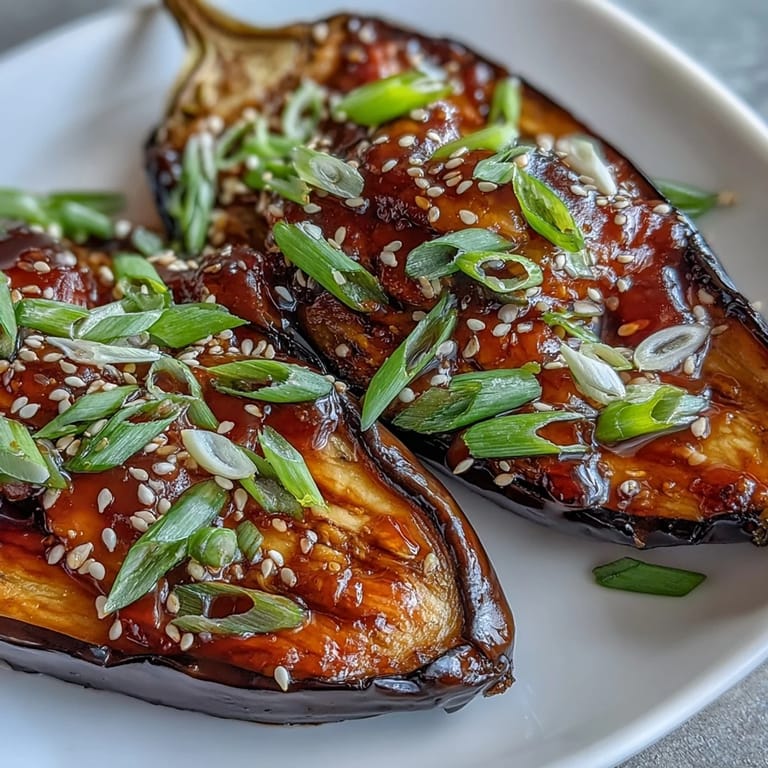
- Sprinkle sesame seeds and green onions over the top while everything's still warm. Serve immediately and watch people's faces light up.
 Pin it
 There's a moment, just after you pull the eggplants from the broiler, when the glaze is still bubbling and the sesame seeds are toasting from the residual heat. The smell hits you—umami and caramel and sesame all at once—and you realize this isn't just a side dish. It becomes the main reason people come back to the table.
The Magic of Umami
Miso is doing heavy lifting here as an umami bomb, but it's not trying to show off. The magic happens when you pair it with sake and mirin, which soften its aggressive saltiness into something approachable and even gentle. The broiler then transforms all of it into something that tastes like it took you hours to perfect, when really you've spent maybe 40 minutes from start to finish.
When to Make This
This dish doesn't need anything fancy to shine—it's happy sitting next to plain steamed rice and a quiet dinner. But it also holds its own as the star of a Japanese-inspired spread, or as a vegetable side that makes people forget they're being healthy. I've made it for weeknight dinners, for meal prep, even for brunch when I wanted something savory instead of sweet.
Flexibility and Variations
This recipe bends without breaking—I've used honey instead of sugar when I had it on hand, and the result was slightly deeper and more floral. I've even stirred a teaspoon of ginger into the glaze when I was feeling adventurous, which shifted the whole flavor story into something more warming and complex. The core technique stays the same no matter how you play with it.
- Substitute honey or maple syrup for the sugar if you want a different kind of sweetness that lingers longer on your palate.
- Add minced garlic or a teaspoon of fresh ginger to the glaze for extra depth and warmth.
- Serve alongside white rice, grilled vegetables, or miso soup to build a complete meal that feels thoughtfully composed.
 Pin it
 This recipe has quietly become one of those dishes I return to again and again, not because it's trendy but because it works. It's the kind of food that makes you feel like you know what you're doing in the kitchen, even on nights when everything else feels chaotic.
Recipe FAQs
- → Can I use regular eggplant instead of Japanese eggplant?
Yes, though the texture will differ slightly. Regular globe eggplants work well—slice them into thicker rounds or planks. They may need a few extra minutes to roast completely tender due to their denser flesh.
- → What type of miso works best for this glaze?
White miso (shiro miso) is ideal for its milder, slightly sweet flavor that complements the eggplant beautifully. Red miso will work but provides a stronger, more intense umami punch that may overpower the delicate vegetable.
- → Why score the eggplant flesh?
Scoring creates a crosshatch pattern that allows the heat to penetrate more evenly, helping the flesh become tender faster. It also creates more surface area for the miso glaze to cling to, ensuring every bite is well-seasoned.
- → How do I prevent the glaze from burning under the broiler?
Watch closely during the final 2–3 minutes of broiling. The sugar in the glaze caramelizes quickly and can go from golden to burnt. Set a timer and stay near the oven—you want bubbling, deep golden color, not blackened edges.
- → Can this be made ahead?
The eggplant is best served fresh from the oven while the glaze is still bubbling and the texture is at its silkiest. However, you can prepare the miso glaze up to a week in advance and store it refrigerated in an airtight container.