 Pin it
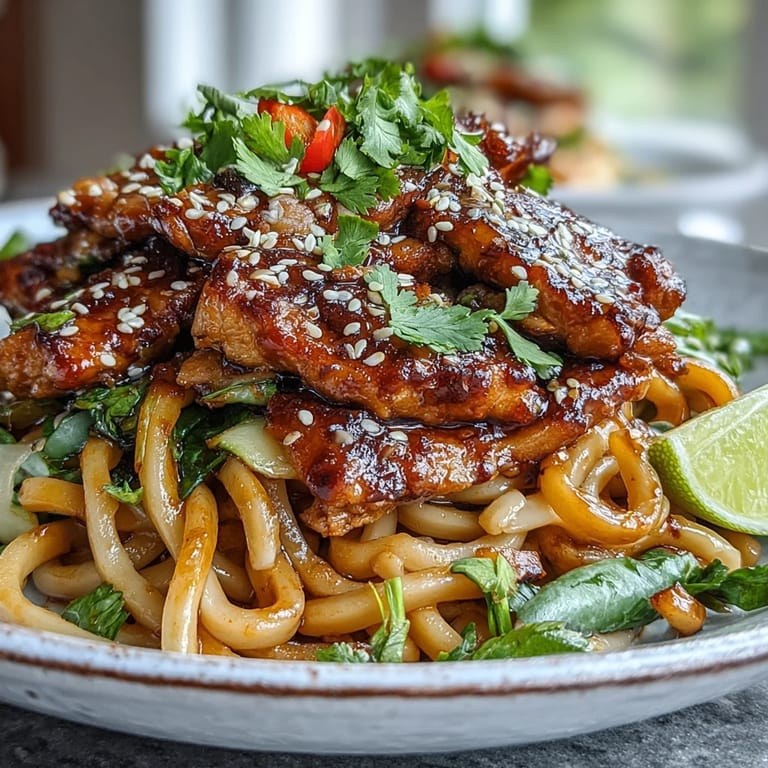
 There was a Tuesday evening when I stood in my kitchen watching the steam rise off a pot of noodles, the smell of ginger and garlic hitting me before I'd even finished slicing the chicken. My roommate had mentioned craving something Asian but quick, and somehow this bowl came together in the time it took to boil water. The best dishes are often the ones you throw together without overthinking, and this one taught me that lesson perfectly.
I made this for friends who showed up unannounced on a rainy Saturday, and watching them tear through those bowls while barely talking told me everything. One of them asked for the recipe before they'd even finished eating, and that's when I knew this would become a regular in my rotation.
Ingredients
- Boneless, skinless chicken breast or thighs, thinly sliced (500 g / 1 lb): Thighs stay more forgiving if you're not perfectly precise with timing, but either works—just slice everything uniform so it cooks evenly.
- Dried udon, soba, or rice noodles (250 g / 9 oz): Udon gives you chew, soba brings earthiness, rice noodles keep things light—pick based on what you're craving that day.
- Red bell pepper, thinly sliced: The sweetness balances the salty-savory sauce and adds a crunch that survives the cooking process.
- Medium carrot, julienned: Cut them thin so they soften just enough while keeping their snap and natural sweetness intact.
- Sugar snap peas, trimmed (100 g / 3.5 oz): These are non-negotiable for texture—they stay crispy even when tossed with hot sauce.
- Spring onions, sliced: Add these at the end so they keep their fresh bite and don't wilt into invisibility.
- Low-sodium soy sauce (60 ml / 4 tbsp): Low-sodium lets you control the salt without ending up with an overly aggressive bowl.
- Brown sugar (2 tbsp): This isn't for sweetness alone—it creates balance and helps the sauce coat everything beautifully.
- Toasted sesame oil (1 tbsp): The toasted kind is essential; regular sesame oil tastes like disappointment in comparison.
- Rice vinegar (1 tbsp): A splash of acid brightens everything and keeps the sauce from feeling heavy.
- Fresh ginger, grated (2 tsp): Grate it fresh right over the bowl—that sharp, clean flavor makes all the difference.
- Garlic, minced (2 cloves): Two cloves is the baseline; more if you're a garlic devotee like I am.
- Cornstarch, optional (1 tsp): Use this if you want the sauce to cling thicker to the noodles—skip it if you prefer a looser glaze.
- Toasted sesame seeds (2 tbsp): Buy them already toasted and watch them transform a simple bowl into something that looks restaurant-quality.
- Fresh coriander or cilantro, chopped: The herbaceous finish feels like a luxury detail that costs nothing.
- Lime wedges, optional: A squeeze of lime at the table lets everyone adjust the brightness to their preference.
Tired of Takeout? 🥡
Get 10 meals you can make faster than delivery arrives. Seriously.
One email. No spam. Unsubscribe anytime.
Instructions
- Cook your noodles first:
- Boil them according to the package, then drain and rinse under cold water so they don't stick together. This takes the pressure off later when everything's happening at once.
- Whisk your sauce into existence:
- Combine soy sauce, brown sugar, sesame oil, rice vinegar, ginger, and garlic in a small bowl—taste it raw if you're brave, and add that cornstarch if you want a thicker coat on everything.
- Heat your pan until it's ready:
- A large skillet or wok over medium-high heat with a splash of oil gets hot enough to sear chicken properly without steaming it. You'll hear it sizzle when the chicken hits.
- Cook the chicken with patience:
- Slice it thin so it only takes 4 to 5 minutes to turn golden and cooked through—resist the urge to fuss with it constantly. Let it sit in the pan long enough to develop color.
- Stir-fry your vegetables quickly:
- After the chicken's out, add bell pepper, carrot, and snap peas to the same pan and keep them moving for 2 to 3 minutes—you want them tender but still with a crack when you bite.
- Bring everything back together:
- Return the chicken to the pan, pour in that sauce, and toss everything for a minute until it coats and thickens slightly. The pan will smell incredible at this point.
- Finish with noodles and spring onions:
- Add your cooled noodles and the sliced spring onions, toss until hot throughout, and taste for balance—add more vinegar if it needs brightness or a pinch more brown sugar if you want sweetness.
- Plate and garnish without hesitation:
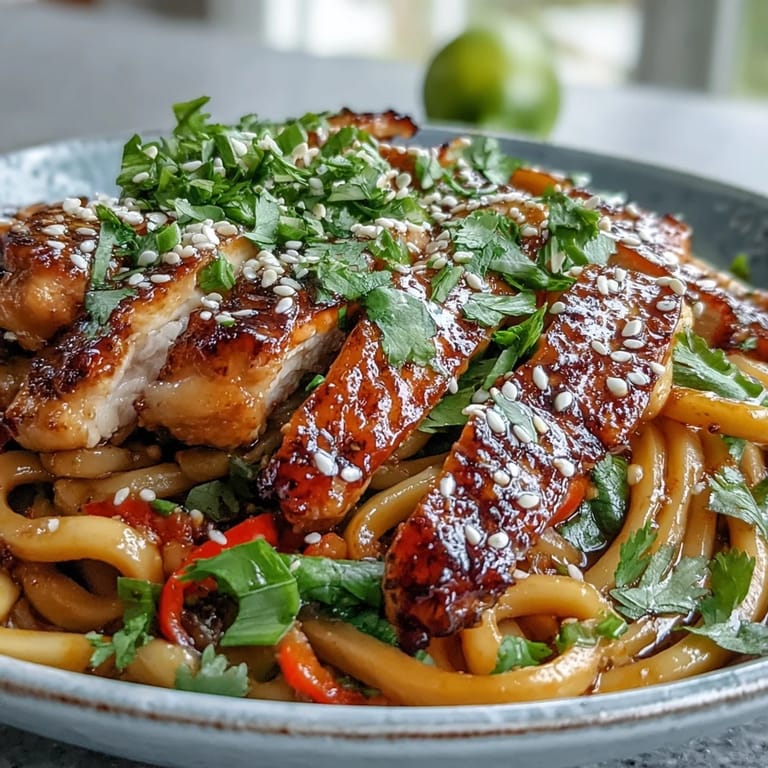
- Divide into bowls and scatter sesame seeds and cilantro on top while it's still steaming, with lime wedges on the side for anyone who wants to adjust the flavor themselves.
 Pin it
 My nephew, who's usually skeptical about anything with visible vegetables, asked for seconds without being asked, and that's when this recipe moved from my weeknight rotation into something I make for people I want to impress without trying too hard. Food that makes people happy without requiring you to stress is the best kind of cooking.
The Sauce Is Everything
The magic in this bowl lives entirely in that sesame sauce—brown sugar and soy sauce form the backbone, but ginger and garlic give it personality and sesame oil gives it sophistication. I've learned that when you're cooking quickly, investing time in a proper sauce means you're not fighting an uphill battle to make simple ingredients taste remarkable. That balance of sweet, salty, and sharp is what separates this from just tossing noodles and chicken together.
Customizing Without Losing the Plot
This bowl is flexible enough to work with whatever you have in the crisper drawer, but not so flexible that it falls apart if you change things randomly. Broccoli works, mushrooms work, bok choy works—but they all work because you're keeping the sauce ratio the same and cooking times relatively short. I've found that the best way to improvise is to add vegetables that cook in roughly the same time as those snap peas, so the bowl stays coherent instead of turning into a vegetable soup with noodles.
Making It Your Own at the Table
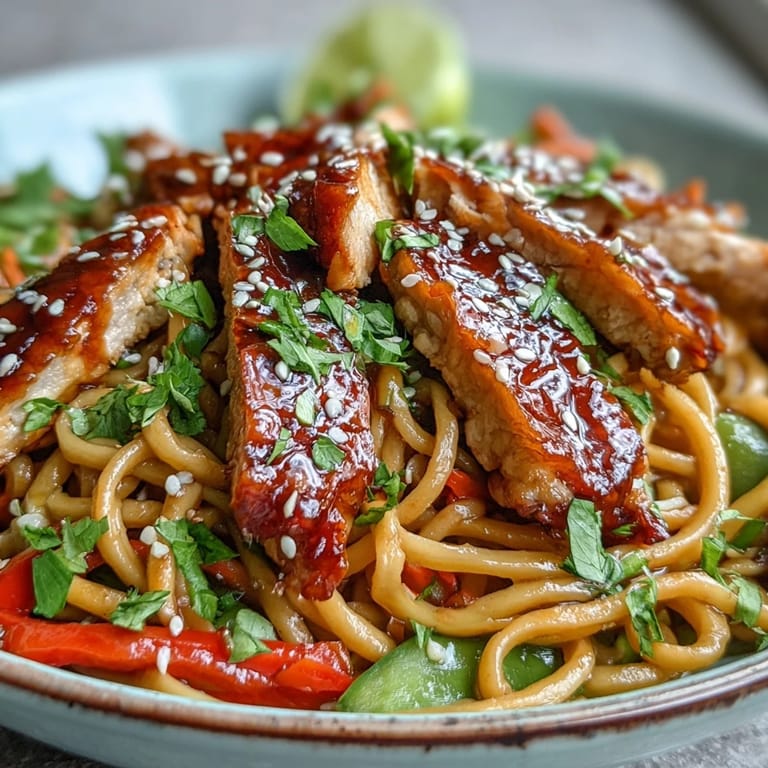
The beauty of serving this in bowls rather than on a platter is that everyone gets to finish their own version. Lime wedges, extra sesame seeds, cilantro piled high—these aren't just garnishes, they're an invitation to make the dish exactly how you want it. I've watched people with completely different preferences all walk away happy from the same pot of sauce and noodles, which feels like the highest compliment a dish can receive.
- Keep lime wedges on the side so people can brighten their bowl at their own pace without making the noodles soggy.
- Toast extra sesame seeds in a dry pan right before serving—they go from invisible to the best part of the bowl with just two minutes of heat.
- Set out fresh cilantro and let people use as much as they want; there's no such thing as too much herb in a bowl that needs brightness.
 Pin it
 This bowl proves that dinner doesn't need to be complicated to be delicious, and that's the whole reason it keeps appearing on my table. Make it once and you'll understand why my friends keep asking for it.
Recipe FAQs
- → What type of noodles work best?
Udon, soba, or rice noodles all perform beautifully. Udon offers a satisfying chewiness, soba brings a nutty buckwheat flavor, and rice noodles stay light and delicate. Choose based on texture preference or dietary needs.
- → Can I prepare this ahead?
Components can be prepped in advance—slice vegetables and chicken, whisk the sauce, and cook noodles up to a day ahead. Store everything separately in the refrigerator, then quickly stir-fry and combine when ready to serve.
- → How do I prevent the sauce from becoming too salty?
Using low-sodium soy sauce helps control saltiness. Taste the sauce before adding it to the pan—if it's too intense, dilute with a splash of water or add more brown sugar to balance flavors.
- → What vegetables can I substitute?
Baby corn, bamboo shoots, water chestnuts, or snow peas all work well. Broccoli florets, sliced mushrooms, or baby spinach can add variety. Aim for a colorful mix that maintains some crunch after brief cooking.
- → Is the cornstarch necessary?
The cornstarch is optional but helps create a glossy, slightly thickened sauce that clings beautifully to noodles and chicken. Without it, the sauce will be thinner but still flavorful. For a lighter version, simply omit it.
- → Can I make this vegetarian?
Replace the chicken with firm tofu, pressed and cubed, or tempeh slices. Pan-fry until golden and proceed with the remaining steps. The sauce complements plant-based proteins just as well as poultry.