 Pin it
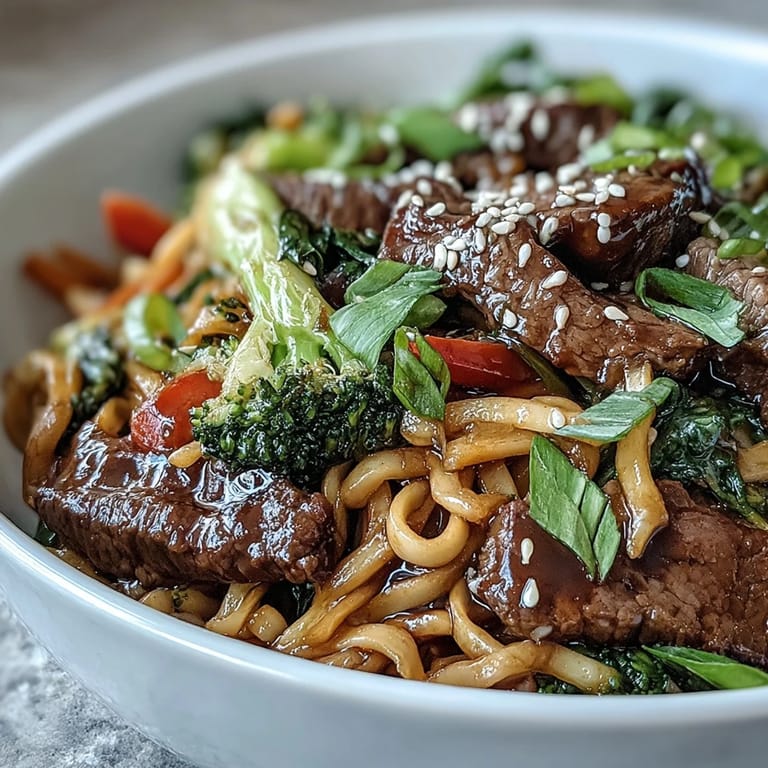
 My neighbor Jun once knocked on my door holding a jar of gochujang and asked if I had any brown sugar. An hour later, we were standing side by side at my stove, her teaching me how to balance sweet and savory in a way I'd never quite managed before. The flank steak sizzled, the garlic hit the hot oil, and suddenly my kitchen smelled like the Seoul street market she'd described a hundred times. That night, over steaming bowls of glossy noodles and tender beef, I learned that some recipes aren't just about following steps—they're about letting someone else's memories become part of your own.
I made this for my brother's birthday last spring when he asked for anything but cake. He sat at the counter, chopsticks in hand, watching me toss the noodles with the sauce, and the moment I slid the bowl in front of him, he smiled in that quiet way that means you got it exactly right. We didn't talk much that night, just ate and listened to the rain start up outside. Later he texted me a photo of his empty bowl with the caption again soon, and I knew this dish had earned its place in our small tradition of meals that matter.
Ingredients
- Rice noodles: These slippery, silky strands soak up the sauce like a sponge, and if you rinse them in cold water after cooking, they won't clump together while you prep everything else.
- Flank steak: Slicing it thin against the grain is the difference between tender bites and chewy regret, and a sharp knife plus a few minutes in the freezer beforehand makes the job almost effortless.
- Broccoli florets: They add a satisfying crunch and a pop of green that balances all the richness, and I've learned that smaller florets cook faster and catch more sauce in their little crevices.
- Bell pepper: Red or yellow brings sweetness and a slight char when it hits the hot pan, and it's one of those vegetables that somehow tastes better when it's been tossed with soy and sesame.
- Carrot: Julienned into thin matchsticks, it cooks quickly and adds a gentle sweetness that rounds out the savory punch of the beef and garlic.
- Green onions: Chopped and scattered on top at the last second, they bring a fresh, sharp bite that wakes up every other flavor in the bowl.
- Garlic: Minced fine and cooked just until it perfumes the oil, it's the backbone of the entire dish and the reason your kitchen will smell like magic.
- Ginger: Grated fresh, it adds a warm, peppery zing that cuts through the richness and makes the sauce feel brighter and more alive.
- Soy sauce: The salty, umami depth that ties everything together, and I always keep a bottle of low-sodium on hand so I can control the saltiness without sacrificing flavor.
- Brown sugar: It melts into the sauce and caramelizes slightly in the pan, giving you that glossy, sticky coating that clings to the noodles and makes every bite a little sweet.
- Sesame oil: Just a tablespoon transforms the sauce into something nutty and toasty, and it's one of those ingredients where a little goes a long way, so don't skip it.
- Vegetable oil: High smoke point means you can crank the heat without any burnt smell, and it's neutral enough to let all the other flavors shine.
- Sesame seeds: A sprinkle on top adds a tiny crunch and a whisper of nuttiness that makes the bowl look as good as it tastes.
Tired of Takeout? 🥡
Get 10 meals you can make faster than delivery arrives. Seriously.
One email. No spam. Unsubscribe anytime.
Instructions
- Prep the Noodles:
- Cook the rice noodles according to the package directions, then drain and rinse them under cold water to stop the cooking and keep them from turning into a sticky mass. Set them aside while you get the skillet going.
- Sear the Beef:
- Heat the vegetable oil in a large skillet or wok over medium-high heat until it shimmers, then add the thinly sliced flank steak in a single layer and let it sear without stirring for about 2 minutes so it gets a nice brown crust. Flip the pieces, cook another minute, then pull them out and set them aside on a plate.
- Bloom the Aromatics:
- In the same skillet, toss in the minced garlic and grated ginger and stir them around for about 30 seconds, just until the smell hits you and the garlic barely starts to turn golden. Don't let them burn or they'll turn bitter and ruin the whole thing.
- Stir-Fry the Vegetables:
- Add the broccoli, bell pepper, and julienned carrot to the skillet and stir-fry for about 5 minutes, tossing frequently so everything cooks evenly and the edges get a little char. You want them tender but still crisp enough to have some bite.
- Mix the Sauce:
- While the vegetables are cooking, whisk together the soy sauce, brown sugar, and sesame oil in a small bowl until the sugar dissolves completely and the sauce looks glossy. This takes maybe a minute, and it's worth it to make sure every spoonful is balanced.
- Bring It All Together:
- Return the beef to the skillet, pour the sauce over the beef and vegetables, and stir everything together so the sauce coats every piece. Let it bubble for a minute so the flavors meld and the sauce thickens just a bit.
- Toss in the Noodles:
- Add the cooked rice noodles to the skillet and gently toss everything together with tongs or a spatula until the noodles are evenly coated and heated through, about 2 minutes. Be gentle so you don't break the noodles, but make sure every strand gets some sauce.
- Garnish and Serve:
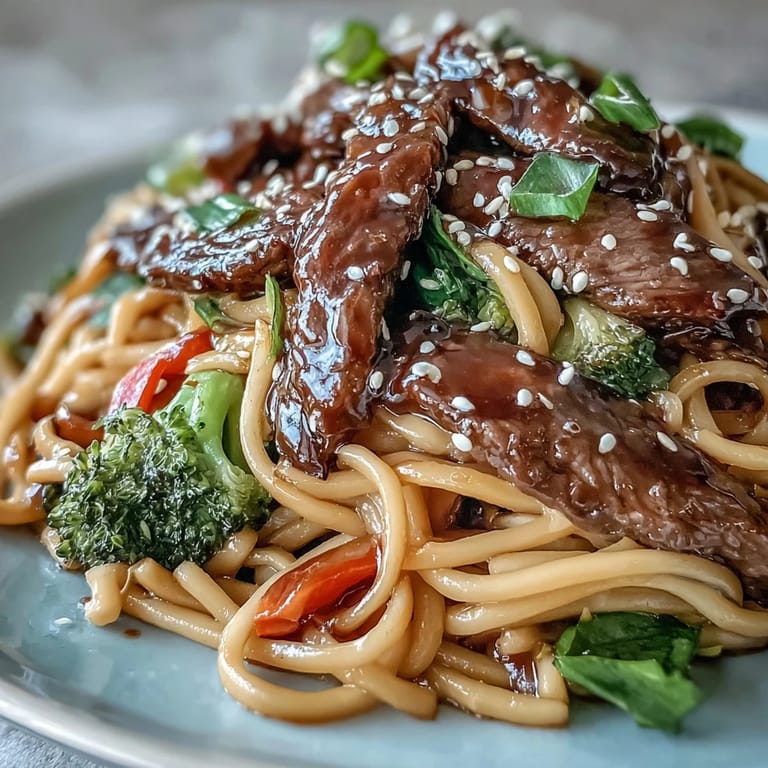
- Slide the noodles into bowls, then scatter chopped green onions and a generous sprinkle of sesame seeds on top. Serve immediately while everything is still hot and glossy.
 Pin it
 One rainy Tuesday, I made this for myself after a long day and sat at the table with just a bowl, a pair of chopsticks, and the sound of water on the windows. The warmth of the noodles, the way the sauce clung to each strand, the little crunch of sesame seeds between my teeth—it all felt like comfort in its purest form. I realized then that some meals don't need an occasion or an audience, they just need to be exactly what you need in that moment.
Variations to Try
If you want to switch things up, toss in snap peas or thin slices of zucchini with the other vegetables for extra crunch and color. I've also swapped the flank steak for chicken thighs or pressed tofu, and both work beautifully as long as you sear them well to get that caramelized edge. For a spicy kick, stir a spoonful of gochujang or sriracha into the sauce before you pour it over the beef, and adjust the heat to your liking. Once I added a handful of baby spinach at the very end, and it wilted into the noodles in the most satisfying way.
Storing and Reheating
Leftovers keep in an airtight container in the fridge for up to 3 days, and honestly, they taste almost as good the next day once the flavors have had time to settle. When you reheat, add a splash of water or a drizzle of sesame oil to loosen the noodles, then warm everything gently in a skillet over medium heat or in the microwave in short bursts. I usually toss in a handful of fresh green onions and sesame seeds after reheating to bring back that just-made brightness.
Tools and Timing Tips
A large skillet or wok is essential because you need room for everything to sear and toss without steaming, and a good pair of tongs makes the tossing part feel effortless. I always prep my ingredients before I turn on the heat—garlic minced, ginger grated, vegetables sliced—so once the pan is hot, everything moves quickly and nothing burns. If you're new to stir-frying, keep the heat high and your spatula moving, and don't be afraid of a little char on the vegetables, that's where the flavor hides.
- Freeze the flank steak for 15 minutes before slicing to make thin, even cuts without the meat sliding around.
- Use a small bowl to mix your sauce ahead of time so you're not scrambling while the vegetables are cooking.
- Taste the dish before you garnish and add a pinch more brown sugar or a splash more soy sauce if it needs adjusting.
 Pin it
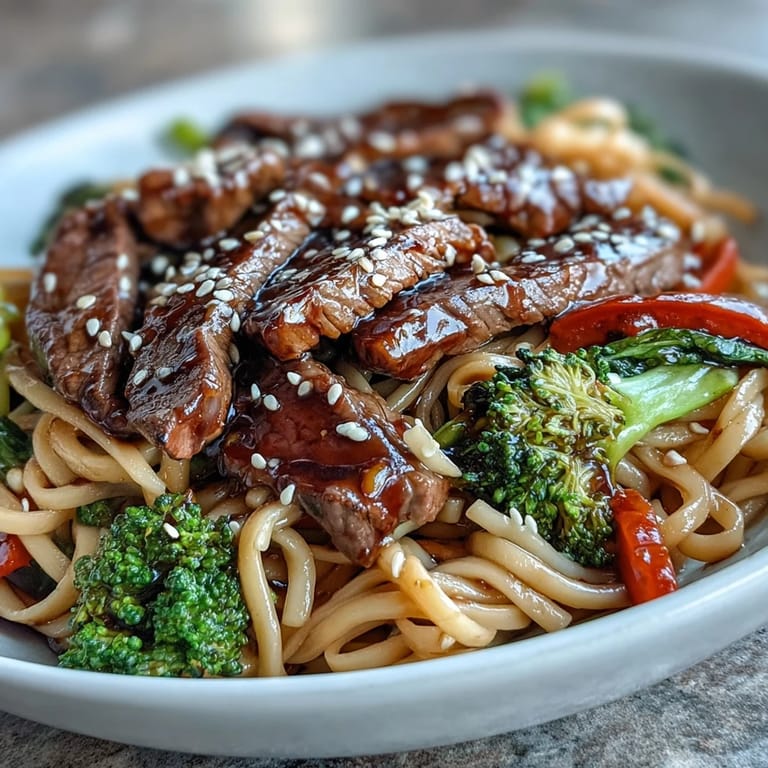
 This bowl of noodles has a way of turning an ordinary evening into something special, and I hope it does the same for you. Make it your own, share it with someone you love, and let it become part of your story too.
Recipe FAQs
- → What cut of beef works best for this dish?
Flank steak is ideal because it's lean and takes on flavors beautifully. Slice it thinly against the grain for maximum tenderness. Sirloin or skirt steak also work well as alternatives.
- → Can I make this dish spicier?
Absolutely. Stir in sriracha, gochujang (Korean chili paste), or red pepper flakes to the sauce mixture. Start with one teaspoon and adjust to your preferred heat level.
- → How do I prevent rice noodles from sticking together?
After cooking, rinse the noodles under cold water to stop the cooking process and remove excess starch. Toss them with a small amount of sesame oil before adding to the skillet.
- → Can I prepare components ahead of time?
Yes. Slice the beef and vegetables up to a day in advance and store separately in the refrigerator. Mix the sauce ingredients ahead and keep in a sealed container. Cook everything just before serving for best texture.
- → What vegetables can I substitute?
Snap peas, zucchini, mushrooms, bok choy, or baby corn all work wonderfully. Use whatever crisp vegetables you enjoy or have on hand. Aim for about 3 cups total vegetables.
- → Is this dish gluten-free?
It can be. Use certified gluten-free rice noodles and tamari instead of soy sauce. Always check labels on condiments to ensure they meet your dietary needs.