 Pin it
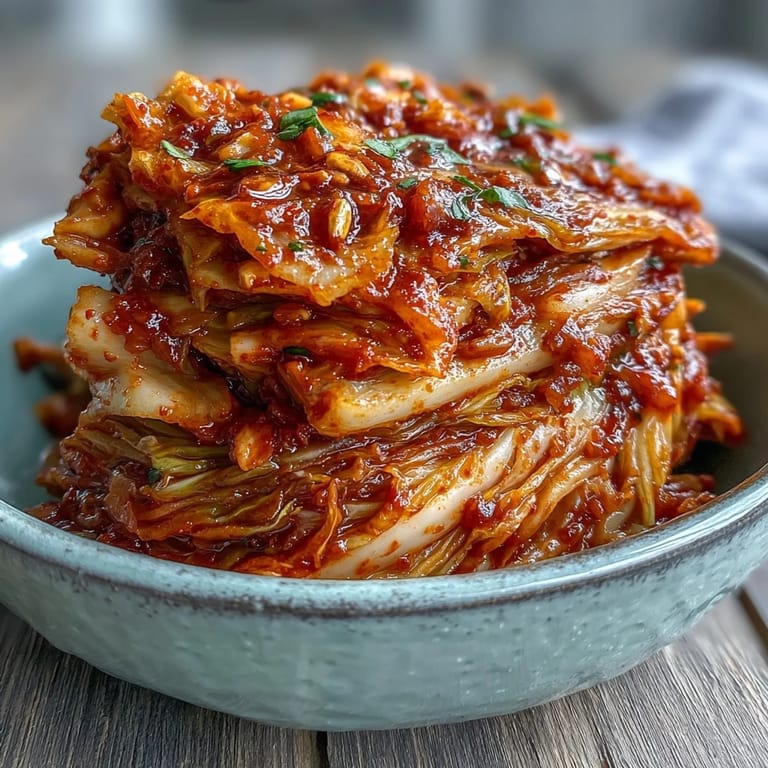
 Kimchi is a vibrant, spicy, and tangy traditional Korean side dish that brings a burst of umami and crunch to any meal. This medium-difficulty recipe features a healthy blend of fermented napa cabbage and radishes, seasoned with chili, garlic, and ginger. Naturally packed with probiotics, it is a nutritional powerhouse that is both vegan-friendly and gluten-free when prepared with the appropriate substitutes.
Pin it The process of making kimchi at home is a rewarding culinary tradition. By salting the cabbage and preparing a thick rice-flour spice paste, you create a complex environment where flavors transform through fermentation. Whether you enjoy it fresh or aged, this recipe yields about 2 liters of delicious, crunchy side dish that elevates any table.
Ingredients
Tired of Takeout? 🥡
Get 10 meals you can make faster than delivery arrives. Seriously.
One email. No spam. Unsubscribe anytime.
- 1 large napa cabbage (about 1.2 kg / 2.5 lbs)
- 1 medium daikon radish (about 200 g), julienned
- 4 scallions, sliced
- 1 medium carrot, julienned (optional)
- 80 g (1/3 cup) coarse sea salt
- 1.5 liters (about 6 cups) cold water
- 6 cloves garlic, minced
- 1 thumb-sized piece fresh ginger, peeled and minced
- 1 small onion, roughly chopped
- 3 tbsp fish sauce (or soy sauce for vegan)
- 1 tbsp sugar
- 3–5 tbsp Korean red chili flakes (gochugaru), to taste
- 2 tbsp rice flour
- 150 ml (2/3 cup) water
Instructions
- Step 1
- Cut the napa cabbage lengthwise into quarters, then chop into 2-inch pieces.
- Step 2
- Dissolve sea salt in 1.5 liters cold water in a large non-reactive bowl. Add cabbage pieces, tossing to coat. Place a plate and a weight on top to keep submerged. Let sit for 2 hours, tossing every 30 minutes.
- Step 3
- Rinse the salted cabbage thoroughly under cold water 2–3 times to remove excess salt. Drain well.
- Step 4
- To make the spice paste, whisk rice flour with 150 ml water in a small saucepan over medium heat until thickened (about 1–2 minutes). Let cool.
- Step 5
- In a blender, combine cooled rice paste, garlic, ginger, onion, fish sauce (or soy sauce), and sugar. Blend until smooth. Stir in gochugaru to desired spice level.
- Step 6
- In a large bowl, combine drained cabbage, daikon radish, carrot (if using), and scallions. Add spice paste and, using kitchen gloves, massage thoroughly to coat all vegetables.
- Step 7
- Pack the kimchi tightly into clean glass jars or a fermentation crock, pressing down to eliminate air pockets. Leave at least 2.5 cm (1 inch) headspace at the top.
- Step 8
- Seal and leave at room temperature out of direct sunlight for 1–2 days, burping the jars daily to release gas.
- Step 9
- Taste after 48 hours; once sour and tangy to your liking, store in the refrigerator. Kimchi will continue to ferment slowly and develop deeper flavors over several weeks.
Zusatztipps für die Zubereitung
Success with kimchi depends on using the right tools. Ensure you have large mixing bowls, a colander, and clean fermentation jars or a crock. Using a blender or food processor ensures your spice paste is perfectly smooth. Most importantly, wear kitchen gloves when mixing the gochugaru paste to protect your hands from the chili heat.
Varianten und Anpassungen
To accommodate dietary needs, replace fish sauce with soy sauce for a vegan version. If you prefer a milder taste, reduce the amount of gochugaru or add a grated apple or pear to the blender for natural sweetness. Ensure your soy sauce is gluten-free if necessary, as the dish is naturally gluten-free otherwise.
Serviervorschläge
Serve your kimchi as a traditional side dish (banchan), or incorporate it into soups and stews for an umami-rich kick. It is particularly satisfying spooned over steamed rice with a fried egg for a quick lunch. For the best experience, pair it with a crisp lager or a dry Riesling to balance the spicy and sour profile.
 Pin it
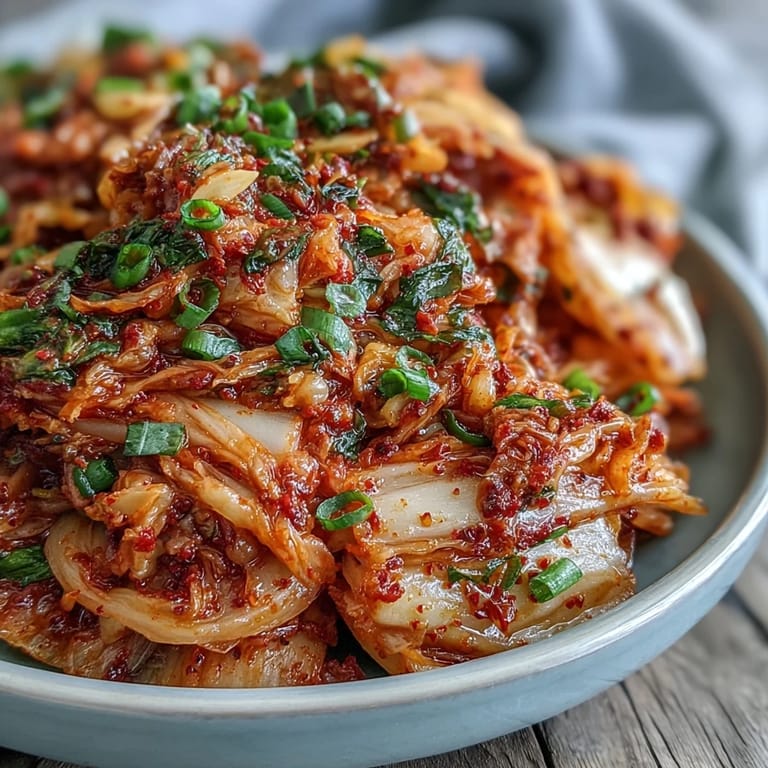
 With a total preparation and minimum fermentation time of 2 days and 40 minutes, you will be rewarded with roughly 12 servings of authentic kimchi. Once refrigerated, it will continue to develop character, providing a flavorful and crunchy addition to your meals for weeks to come.
Recipe FAQs
- → How long does kimchi fermentation take?
Kimchi requires 1-2 days at room temperature for initial fermentation, then continues developing flavor in the refrigerator for several weeks. Taste after 48 hours and refrigerate once it reaches your preferred tanginess.
- → Can I make kimchi without fish sauce?
Absolutely. Substitute fish sauce with soy sauce or vegan fish sauce alternatives. The umami depth remains excellent, and many prefer the lighter, cleaner taste of the vegan version.
- → Why is my kimchi too salty?
The initial salting process draws moisture from cabbage and must be followed by thorough rinsing. Rinse 2-3 times under cold water to remove excess salt before mixing with the spice paste.
- → What makes kimchi bubble during fermentation?
Bubbling indicates active fermentation—beneficial bacteria producing carbon dioxide as they consume sugars. This is completely normal and a sign of healthy probiotic development. Burp jars daily to release pressure.
- → How do I adjust the spice level?
Control heat by varying gochugaru from 3-5 tablespoons. For milder versions, reduce flakes or add grated apple or pear to the paste. Remember that flavors mellow slightly during fermentation.